
Drop the Charges Campaign
Immediate Responses
Following the mass arrests and violence that took place at the first Mardi Gras parade on 24th June, around 300 protestors gathered on 26 June outside Central Court in Liverpool St where the charges against those arrested were being presented to the magistrate. Police made seven more arrests outside the court, fuelling the existing outrage of activists.
In response to growing arrests, emergency demonstrations were held in Melbourne, Brisbane and Adelaide and internationally, in New Zealand, California, Berlin, London, Canada, Boston and New York. Gay newspapers and activist groups reported the attacks on the Mardi Gras, held solidarity actions, and urged protest letters to the NSW Premier.
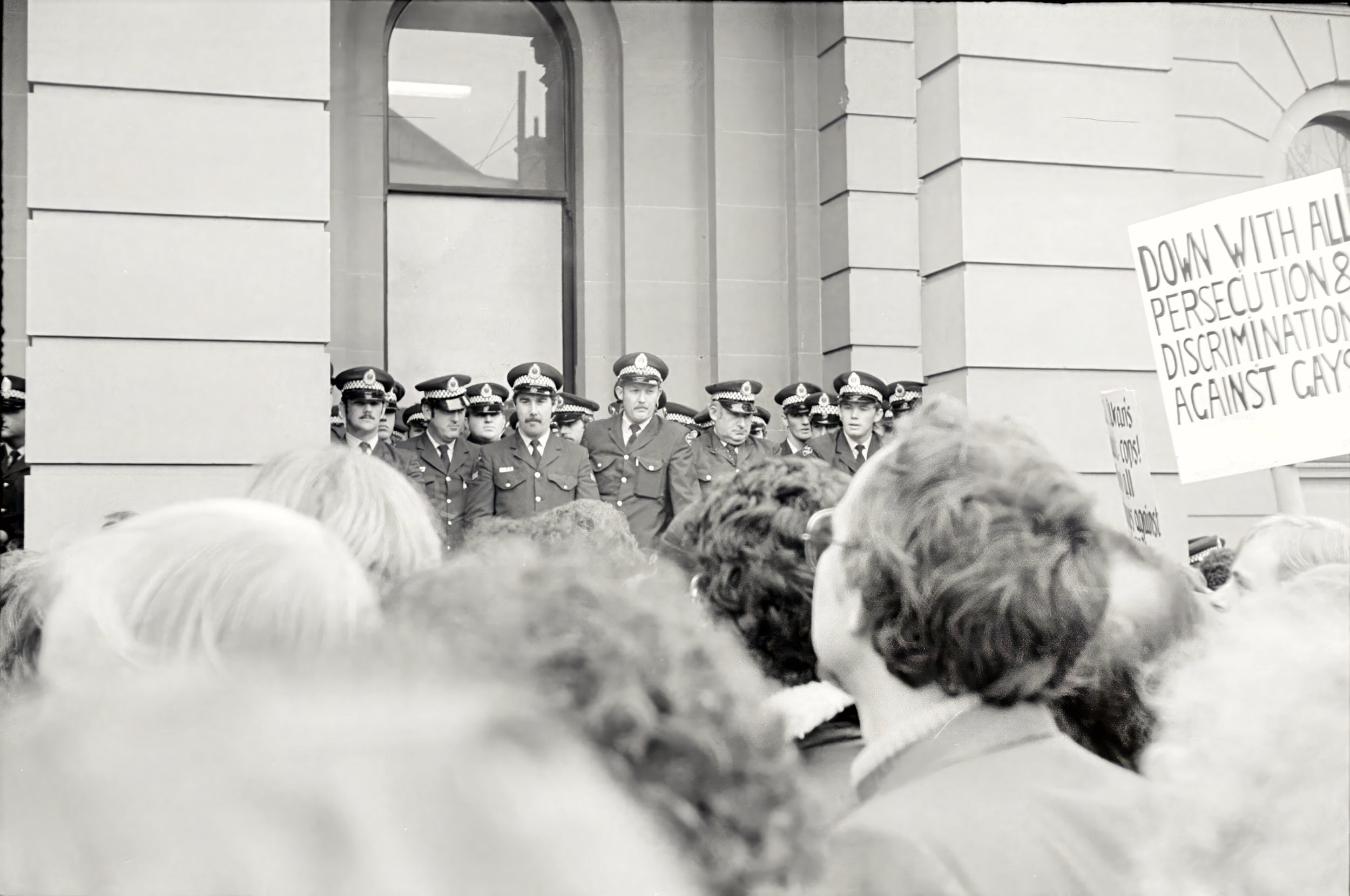
Central Court on 26 June 1978. Photo credit: Anne Roberts
1 July Meeting
On 1 July 1978, hundreds of people crammed into the Stanley Palmer Cultural Palace, a hall on the corner of Stanley and Palmer Streets in Darlinghurst to debate our next steps. The meeting was chaired by Marg McMann from CAMP and Terry Bell from Gay Liberation under a freshly-made Drop the Charges banner.
The meeting was fiery and the decision to march with or without police permission was hotly contested. There was also debate about whether a nighttime or daytime demonstration would make participants feel safer.
John Terry from the Redfern Legal Centre was asked to clarify points related to applying for a Police permit to march. Eventually, the meeting voted to hold a Drop the Charges march on 15 July and seek a permit.
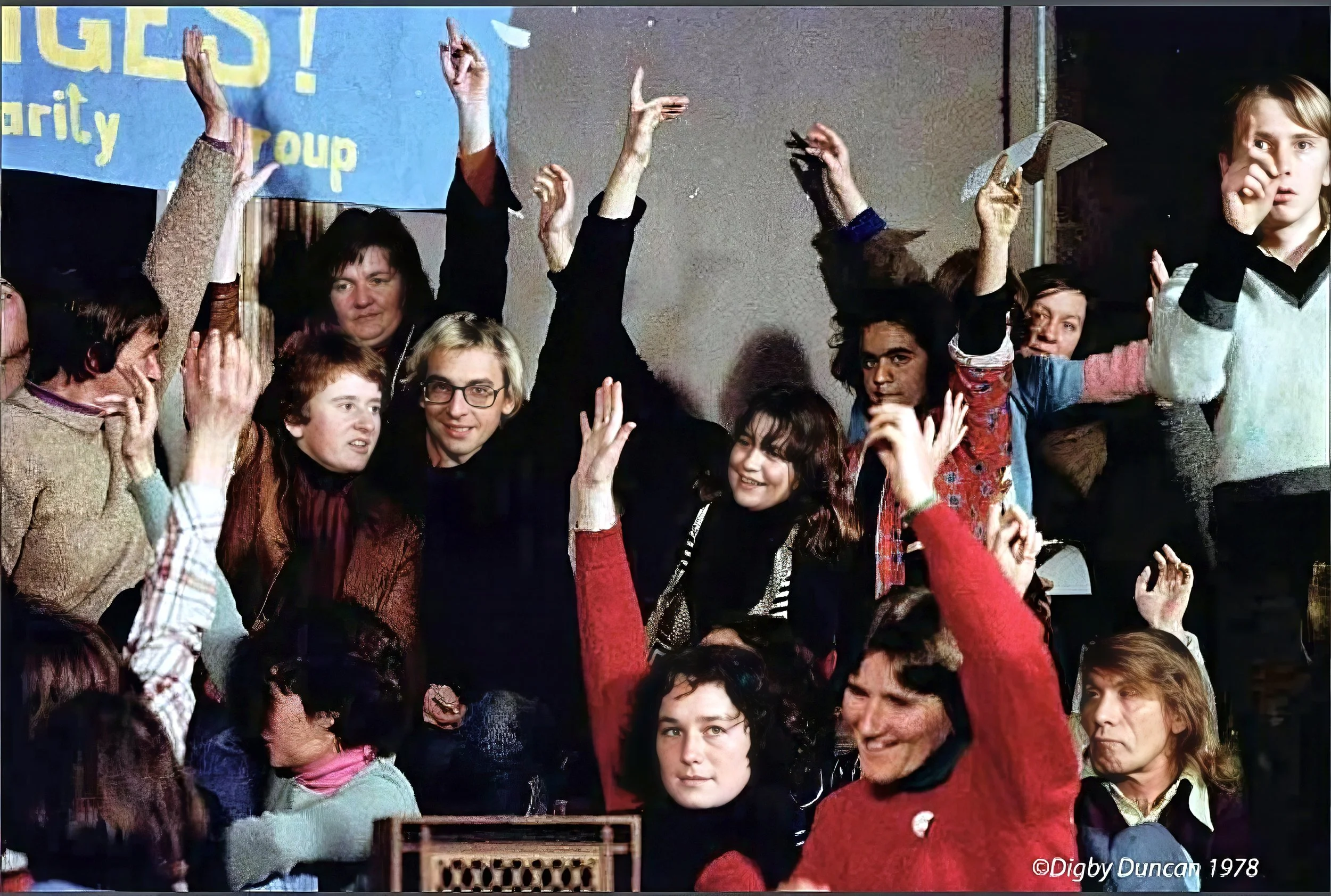
Participants at the 1 July 1978 meeting. Photo credit: Digby Duncan
15 July Demonstration
The Gay Solidarity Group organised the first major demonstration of the Drop the Charges Campaign on Saturday morning, 15 July 1978. The march started in Martin Place, headed up William Street and then around Green Park, past St Vincent’s Hospital, and ended up outside the Darlinghurst Police Station, near Taylor Square.
There was a push to pound on the doors of Darlinghurst Police Station. Then police came from everywhere and boxed in marchers preventing them from dispersing. Police then started picking off demonstrators.
Two thousand people took part in the 15 July demonstration with 14 arrests. It was the largest gay and lesbian rights march in Australia at that time. Our community and allies had come together for a massive political and legal effort.
There was also a car rally on 20th August to Parramatta Park, followed by a picnic. On 16 September a large meeting was held in the Sydney Trades Hall to demand that NSW Labor Attorney-General Frank Walker drop the charges and repeal the Summary Offences Act.
With growing support from many communities, the Gay Solidarity Group continued to organise demonstrations for the charges to be dropped. Many allies joined these demonstrations including Unions, left groups, women’s organisations, progressive churches, ALP members.
But the police continued to arrest us, leading to gay and lesbian rights becoming a broader political issue. We were campaigning for our democratic right to protest and for fewer police powers — a major issue in NSW.
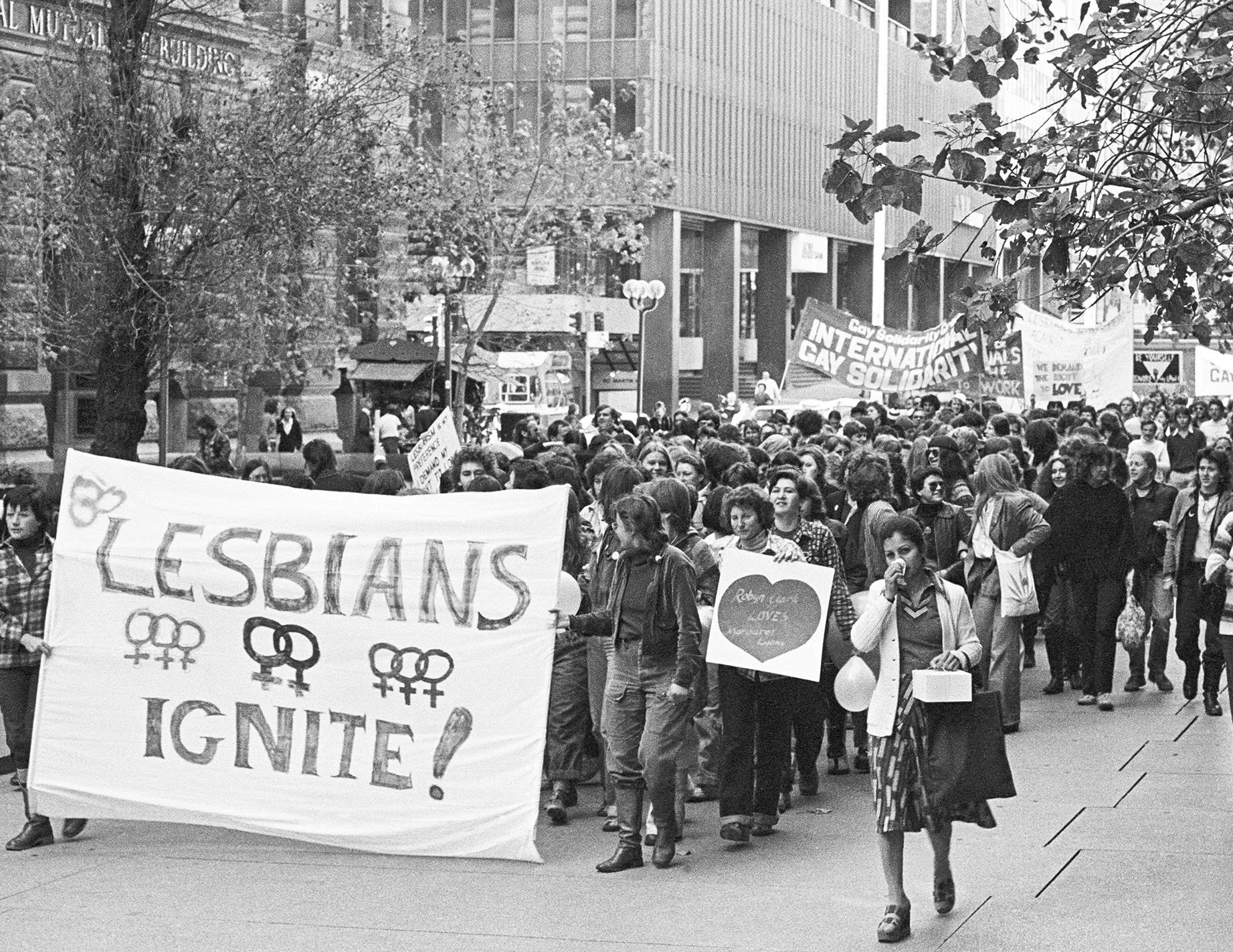
15 July 1978 Drop the Charges demonstration. Photo credit: Sallie Colechin
27 August March
The Fourth National Homosexual Conference was held at Paddington Town Hall in Sydney from 25 to 27 August 1978. When Fred Nile and his Festival of Light became aware of this, they organised an anti-abortion and anti-homosexual rally in Hyde Park.
The plenary of the Conference on Sunday proposed a march against Nile and his homophobic and Right-to-Life forces. The march was spontaneous and there was no police permit.
This event was different to the others earlier in the year as it involved national networks of lesbian, gay and student movements. While it was a protest against NSW Police and took up the Gay Solidarity Group’s demand for the charges against activists to be dropped, it also targeted NSW MLC and right-wing Christian Fred Nile and the religious right for their anti-homosexual and anti-abortion politics.
On Sunday afternoon, 27 August 1978, 300 marchers proceeded down Oxford Street on the footpath. Coming down to Taylor Square they could see a police cordon, rows of police at arms-length arranged across Taylor Square. Many marchers were arrested and those who got through and made it to Hyde Park were met with violent policing and arrests. On that day, a total of 104 marchers were arrested.
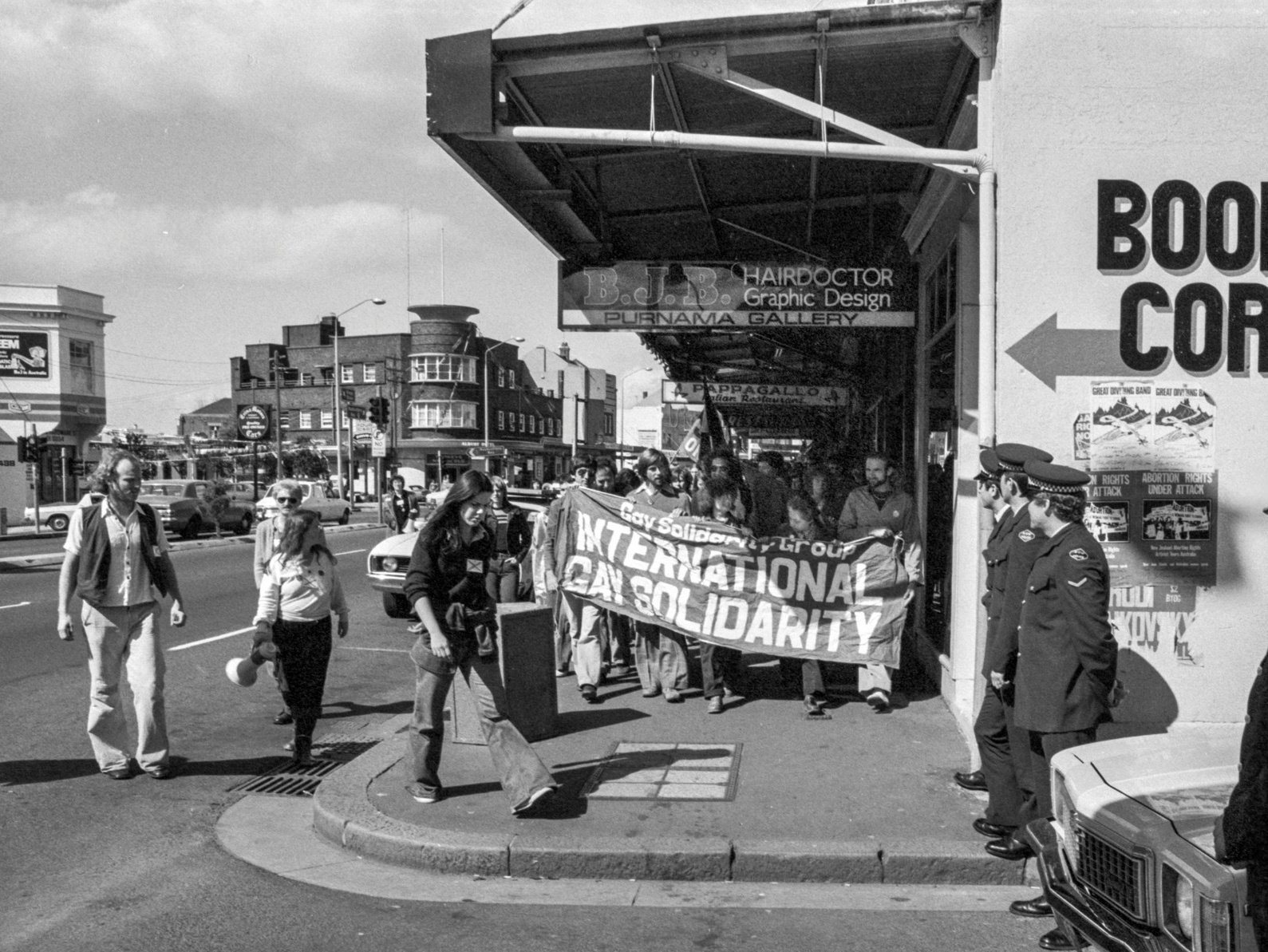
At left: Max Pearce, Diane Minnis, 27 August March. Photo credit: Geoff Friend
How many people were arrested?
The total number of demonstrators arrested in June, July and August of 1978 was 178:
24 June – over 1,000 attacked in Kings Cross, 53 arrests and some brutal bashings
26 June – 300 protested outside Central Court in Liverpool St with 7 arrests
15 July – 2,000 marched from Martin Place to Darlinghurst Police Station with 14 arrests
27 August – 300 marched from the 4th National Homosexual Conference at Paddington Town Hall to Taylor Square and Hyde Park with 104 arrests.
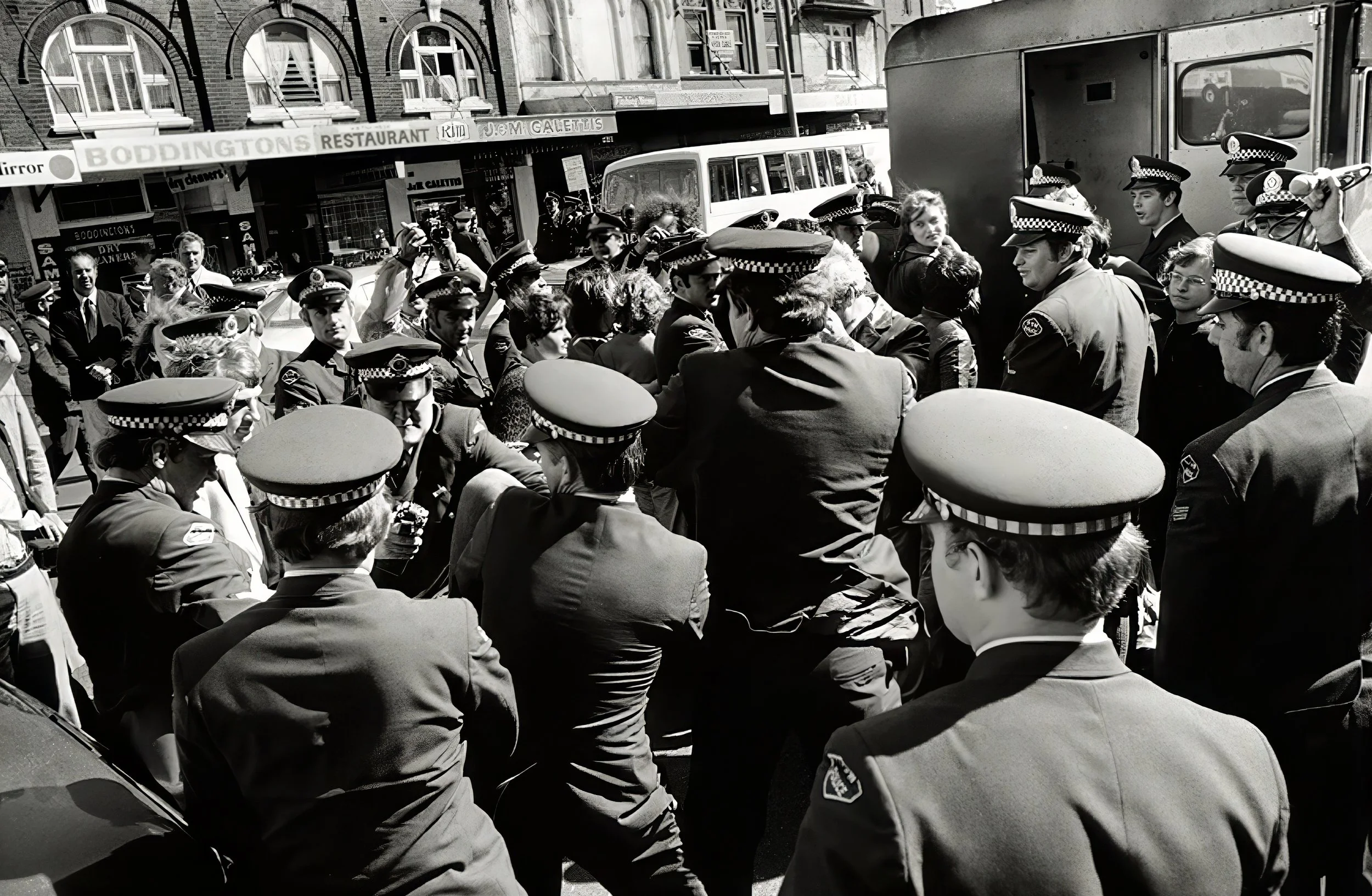
Photo Credit: Geoff Friend
Police arrests on 27 August march. Photo credit: Geoff Friend