
Early Pride History
Historical homophobia
The prevailing attitudes of the 1970s portrayed homosexual women and men as perverts, mentally ill and sinners, resulting in wide-spread discrimination.
In NSW, it wasn’t until 1984 that consensual sex between adult males was decriminalised. Up until then, the law treated gay men as criminals who could be locked away for 14 years. Police actively engaged in entrapment and prosecution of gay men.
Lesbians were largely invisible to society with their existence treated as an aberration and abhorrence to the extent that lesbians faced losing custody of their children as “unfit mothers.”
Although the Australian and New Zealand College of Psychiatrists declared in 1973 that homosexuality should no longer be considered an illness, treatments to “cure homosexuality” continued to be practiced by some medical professionals. These treatments included aversion therapy (using electric shocks), deep sleep therapy (inducing a coma) and lobotomy.
Unsurprisingly, lesbians and gay men were reluctant to publicly come out particularly as there was no community where they could live openly and find support.
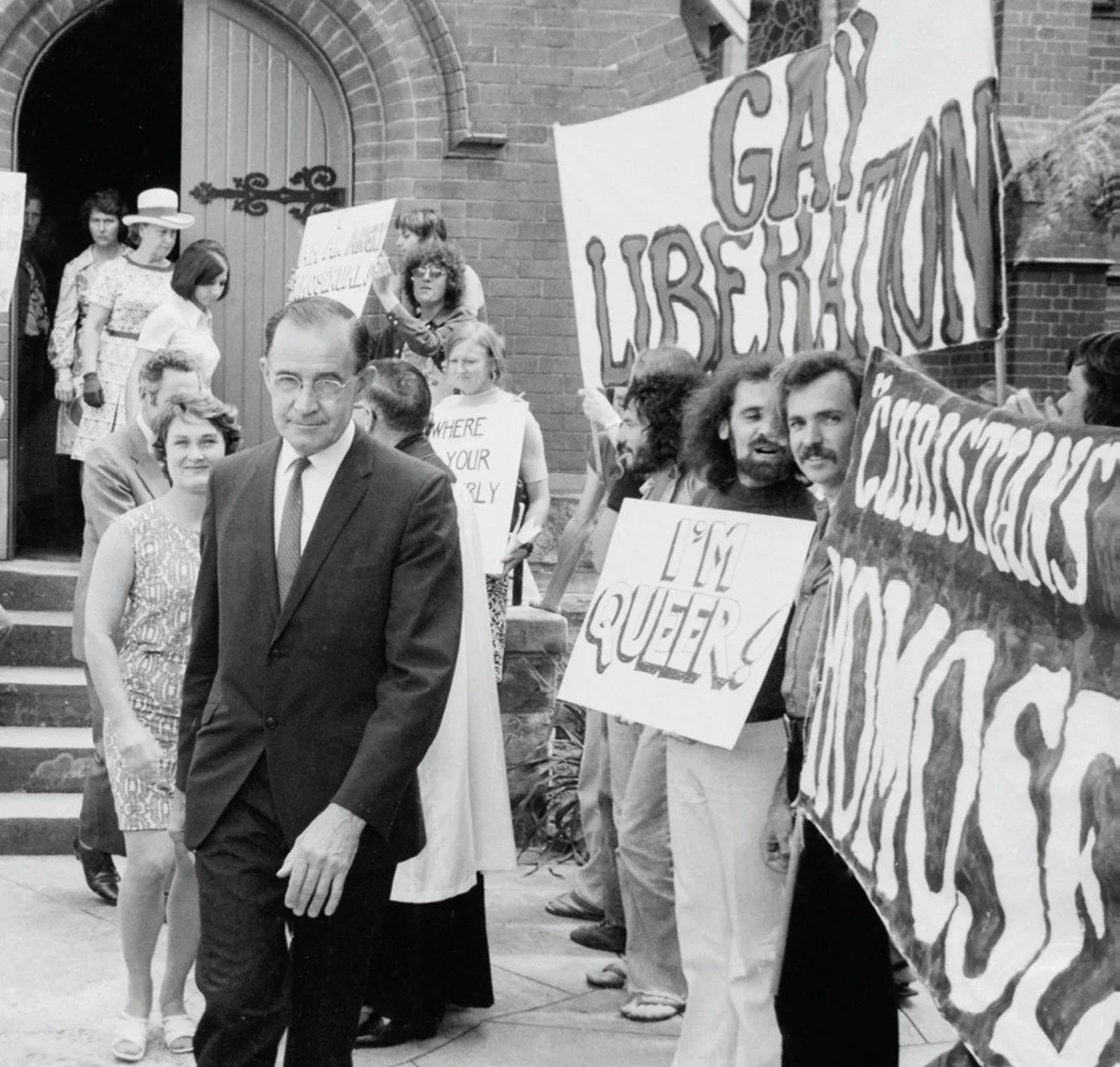
Demonstration against dismissal of Peter Bonsall-Boone, Mosman Anglican Church, 12 November 1972. Photo credit: Philip Potter
Lesbian and gay rights activism begins
Early efforts to combat entrenched homophobia included The Daughters of Bilitis (Australasian Lesbian Movement) and the Homosexual Law Reform Society (HLRS) of the ACT.
The Australian arm of the Daughters of Bilitis was formed in Melbourne in 1969 and is considered Australia's first homosexual rights group. It was inspired by the American Daughters of Bilitis movement. After a few months, the group rejected the increasing radicalisation of its American counterpart and renamed itself the Australasian Lesbian Movement.
The Homosexual Law Reform Society (HLRS) of the ACT was founded on July 27, 1969, by solicitor Michael Landale and university lecturer Thomas Mautner, with Lex Watson. Its primary goal was to advocate for the decriminalisation of consensual private sexual acts between adults. The group discontinued around 1972.
In 1970, CAMP NSW (Campaign Against Moral Persecution) was established in Sydney and quickly spread to all capital cities and university campuses where it was known as Campus CAMP.
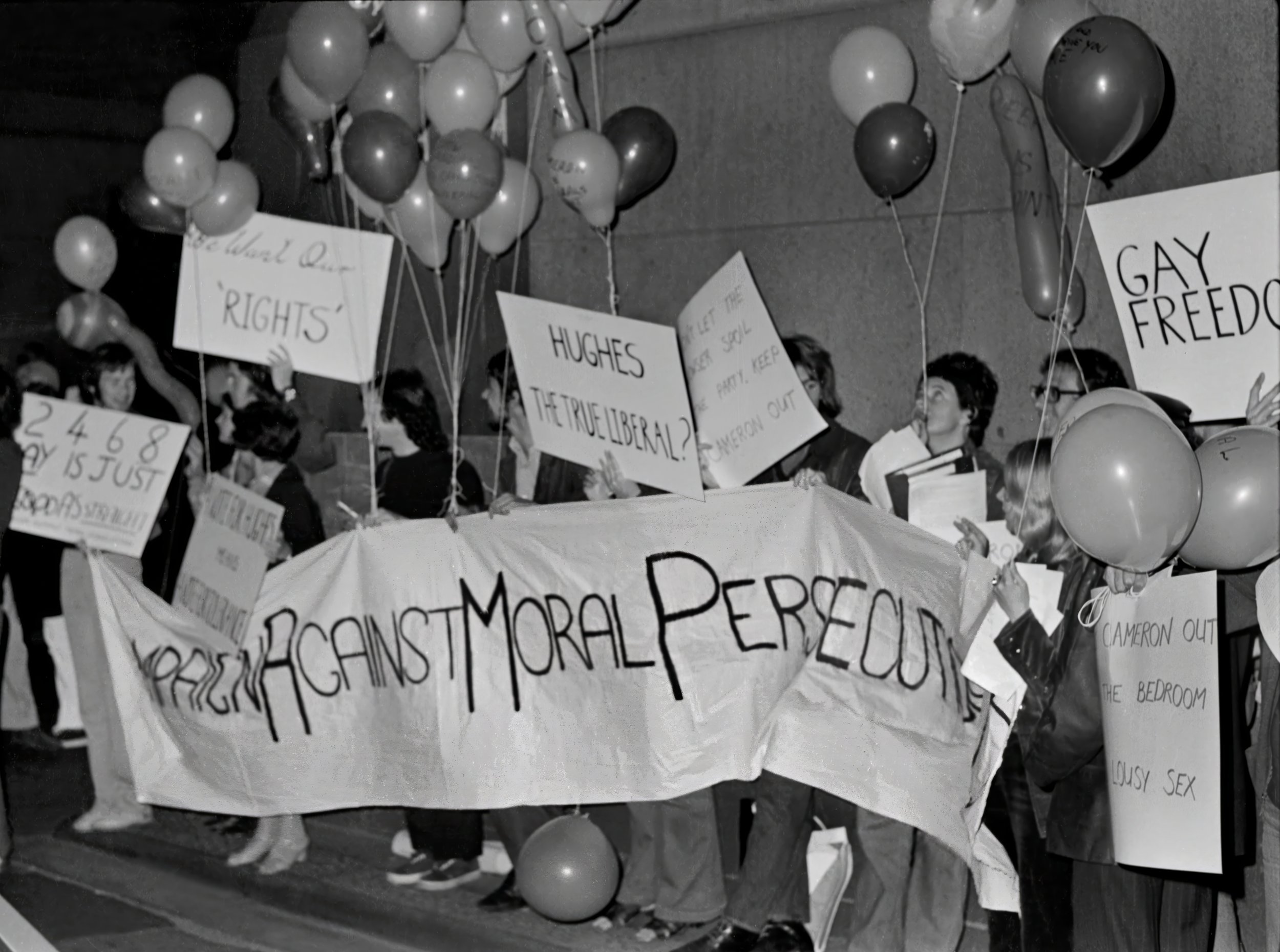
CAMP rally outside Sydney Liberal Party Headquarters 6 October 1971. Photo credit: Philip Potter
CAMP was a very public organisation, which at that time, was not only courageous but also hugely empowering for the many lesbians and gay men living with fear of exposure or isolated from any form of social support. The formation of CAMP was announced when John Ware and Christabel Poll came out in an article called ‘Couples’ in The Australian newspaper on 19 September 1970. The only previous public disclosure of homosexuality at that time had been by Francesca Curtis (co-founder of The Daughters of Bilitis/Australasian Lesbian Movement) in May 1970, appearing on the TV program The Bailey File.
The response to the article in The Australian was overwhelming. John and Cristabel were inundated with an enormous volume of mail. In February 1971 the first public meeting of CAMP was held, where John and Christabel were elected the first Co-Presidents.
CAMP focused on law reform, political action and social support. CAMP’s monthly newsletter CAMP Ink was launched in December 1970. In 1973, CAMP established Phone-a-Friend, later the Gay and Lesbian Counselling Service, which was absorbed into Twenty10 in 1981.
In October 1971, CAMP NSW held the first ever “gay rights” demonstration in Australia, outside Liberal Party Headquarters in Sydney. It was a colourful, noisy, fun-filled demonstration that did much for the self-esteem of the participants – three people immediately phoned home and ‘came out.’
In 1975, two seminars on Female Homosexuality were staged by CAMP NSW funded by the Federal Government under International Women’s Year grants. Also in 1975, CAMP made a submission to the Royal Commission on Human Relationships. In 1976 CAMP initiated Homosexual Solidarity Weekend and conducted the Tribunal into Homosexuals and Discrimination. Members of CAMP were involved in the organisation of the first Mardi Gras and many members participated in the events of 1978.
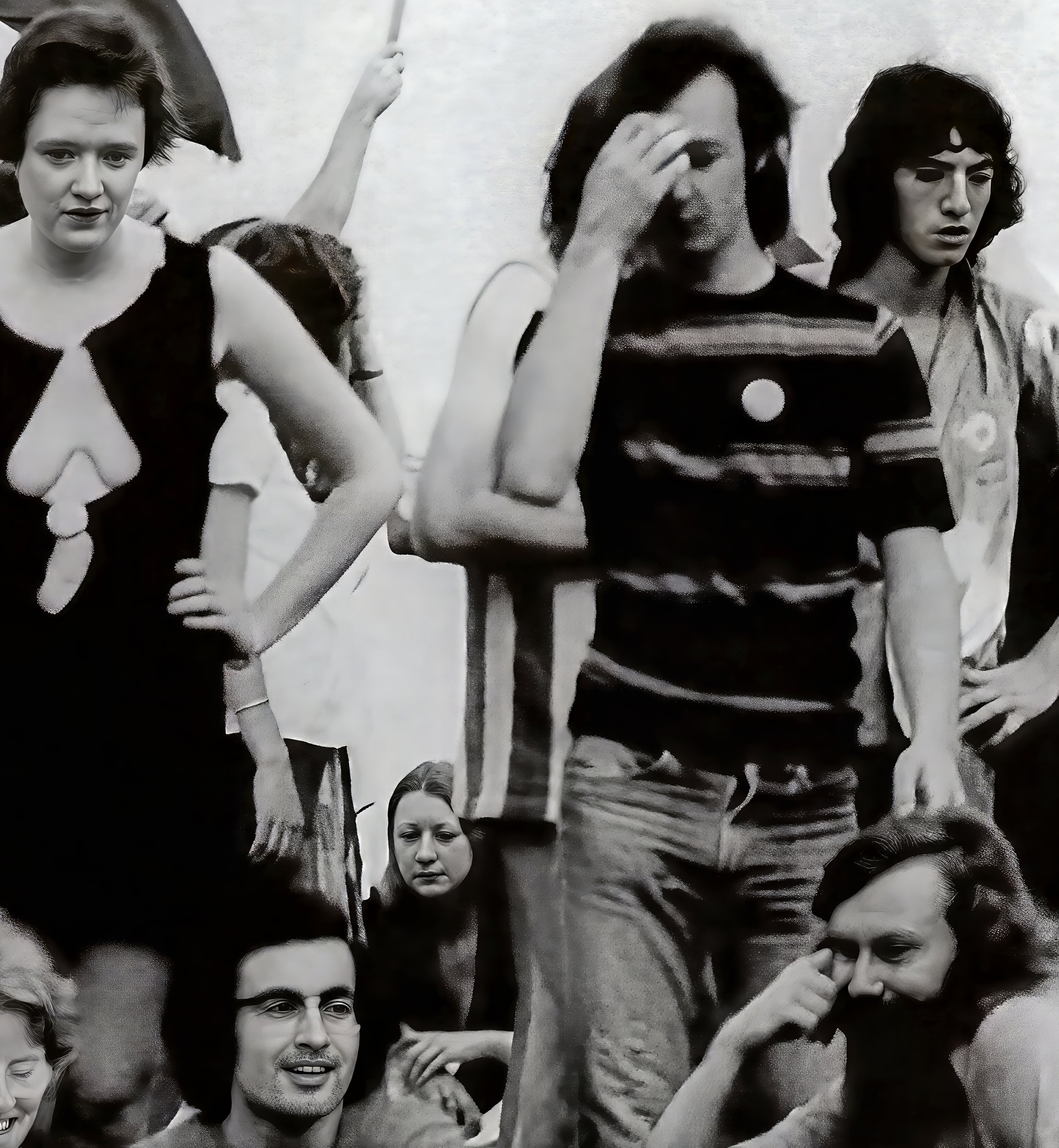
First gay and lesbian rally against the Festival of Light, Hyde Park Sydney, October 1973. Standing L to R: Katy O'Rourke, Terry Batterham. Lower right: Richard Wilson. Photo credit: Terry Rolfe.
Expansion of lesbian and gay rights activism
The 1970s saw the establishment of multiple, diverse lesbian and gay rights groups reflecting a range of ideologies, from conservative to revolutionary. After 1971, with the launch of Dennis Altman’s book Homosexual: Oppression and Liberation, new Gay Liberation groups formed around Australia, mainly based on university campuses.
The early 1970s saw struggles against tight censorship of literature, films, TV and newspapers. Gay liberation articles started to appear in local and international alternative, university, and left newspapers. Lesbian and gay books, magazines and newspapers began to arrive from Canada, USA and UK. Sydney had its first commercial gay magazine in 1972, with William and John.
In early 1973 Radicalesbians was formed in Melbourne when Jenny Pausaker, Kerryn Higgs and friends arrived from London. Inspired by radical feminist theory which insisted on women’s need to organise separately, Radicalesbians changed the dynamic of Melbourne Gay Liberation and indeed of the Women’s Liberation movement which in the early years had been discriminatory towards lesbians. Diane Minnis then bought Radicalesbians to Sydney in late 1973.
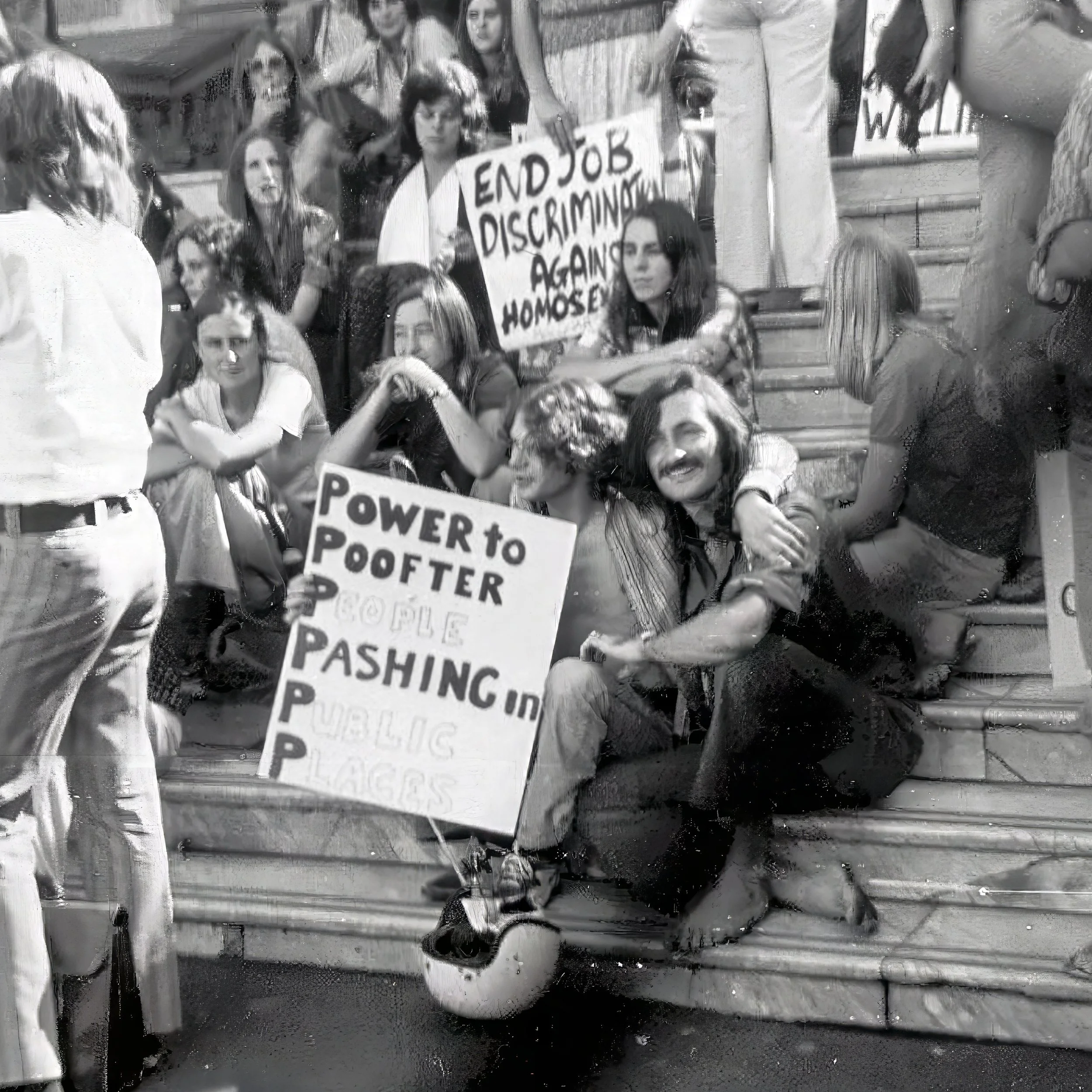
Gay Pride Week, September 1973. Holding sign at front L to R: Gary Schliemann, Terry Rolfe. Photo credit: Copyright John Englart www.takver.com.
A key year was 1973, with the first national Gay Pride Week in September, in which police brutally arrested 18 people in Sydney. Also in 1973, for the first time in the world, a union took strike action in support of gay and lesbian rights after a request by the Macquarie University Student Council. The Council had requested the Builders’ Labourers’ Federation to temporarily ban construction at Macquarie University after a gay student was removed from a church-run residential college.
In the 70s, gay and lesbian identities spread from USA to Australia, as inclusive identities, not necessarily equating to exclusive homosexuality, but aimed at a visible collective response to oppression of sexuality and gender identity. At the time, the movement was inclusive of people who identified as bisexual, butch dykes, female impersonators, drag queens, transvestites, transsexuals, drag kings, leather women/men, radical drag/gender fuck, intersex. In more recent decades non-binary, queer and transgender identities have become more prominent.
In the mid-1970s specific groups organised around teaching, counselling, media, and religious communities, joining existing lesbian and gay social and sports groups.
In October 1975, CAMP member Michael Clohesy was sacked from his teaching position at the Marist Brothers High School in Eastwood due to his homosexual rights advocacy. The NSW Gay Teachers Group was formed in November 1975, prompted by his sacking.
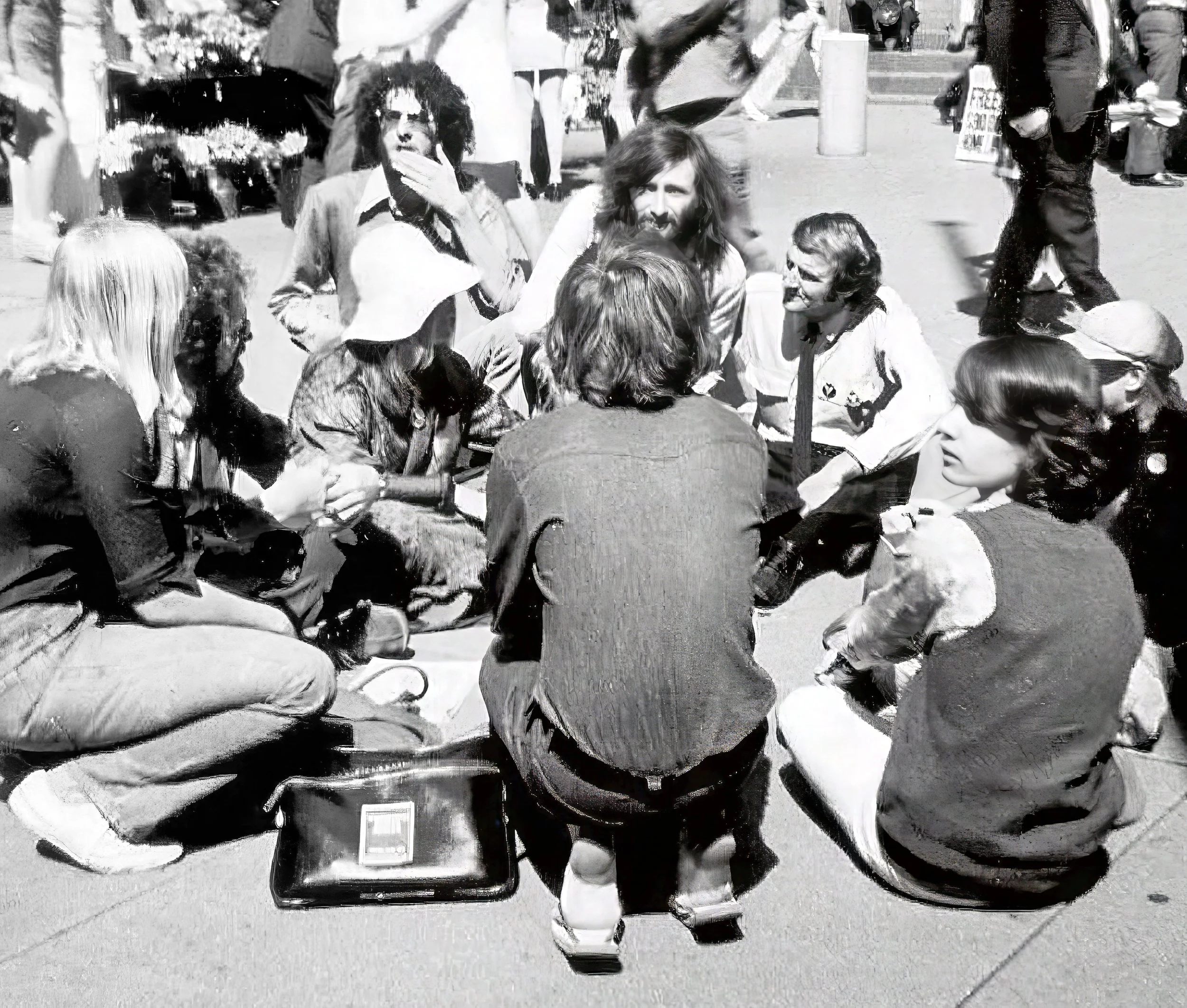
Gay Pride Week, 11 September 1973 Martin Place Sydney following the arrest of Richard Jessop. L to R: Rosie Doyle, next right not known, Mark Diamant, in front not known, Terry Rolfe, Lance Gowland, Jeff McCarthy, Ken Davis, Terry Bell (back to camera). Photo credit: copyright John Englart www.takver.com.
The Lesbian Mothers Group was formed in 1976, driven by research conducted by CAMP NSW members Robyn Plaister and Jim Walker, which found that many lesbian mothers were losing custody of their children due to their sexuality and the assumption that children required a heterosexual role model. In the rare cases where a lesbian mother was given custody, they were restricted from showing affection to their female partner in front of their children. The Lesbian Mothers Group conducted important education of Family Law counsellors to counter myths regarding lesbians and parenting.
The Lesbian Teachers Group was formed during the Lesbian Feminist Conference in June 1978, initiated by Robyn Plaister and Elaine Alinta. The Group was a collective of lesbian feminist teachers from primary and secondary schools in both government and private sectors. The group actively worked to raise awareness of and provide support to lesbian teachers facing discrimination and job insecurity. They formed a lobby group within the Teachers Federation to advocate for change. The NSW Gay Teachers and Students (GAYTAS) group worked both separately and collaboratively with the Lesbian Teachers Group against discriminatory practices.
Lesbians and gay men who wished to practice their religion despite being rejected by it led to the formation of groups like Chutzpah for gay Jewish men which operated from 1974 to 1982. Acceptance was formed in 1973 for gay and lesbian Catholics by Gary Pye and has continued to operate over five decades. The Metropolitan Community Church was founded in Sydney in 1975, based on the denomination founded in San Francisco in 1968 by gay spiritual leader Rev Troy Perry.
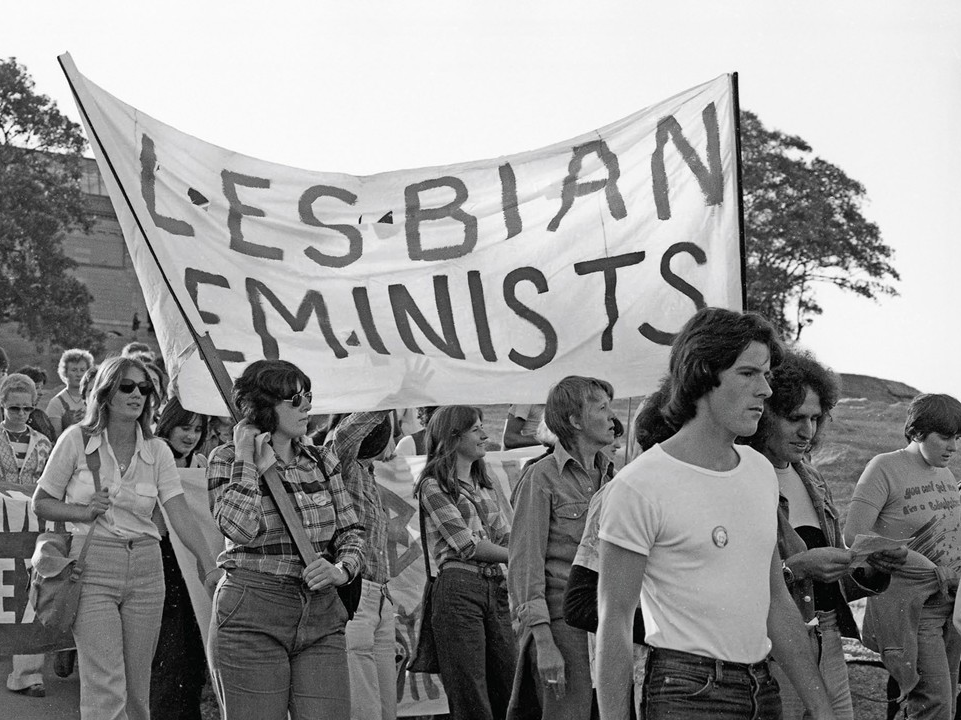
Demonstration against sacking of gay teacher Mike Clohesy, Hyde Park, Sydney, 1975. Carrying Lesbian Feminists banner: Robyn Kennedy. Photo credit: Kathie O'Rourke
Collaborative activism
Although gay and lesbian groups of the time had their own objectives they frequently collaborated on joint actions. This included a noisy protest held in October 1972 when Peter Bonsall-Boone lost his job as church secretary after appearing with his partner Peter de Waal, along with Gabrielle Antolovich and Sue Wills on the ABC TV program, Chequerboard.
There were also joint protests over the discrimination experienced by Macquarie University students Jeremy Fisher (1973) and Penny Short (1974), and teachers Mike Clohesy (1975) and Greg Weir (1977).
There were plenty of other types of activism as well. Gay Liberationists, as they were then known, participated in ‘Zaps’, outrageous actions in public places such as mass same-sex kissing on public transport. Several activists tipped a bucket of blood and sheep’s brains into the foyer of the notorious Dr Harry Bailey, well known for his lobotomy “cures” for homosexuality.
The first arrest of a gay man – David McDiarmid – took place in early 1972 at a gay and lesbian rights demonstration. McDiarmid, who was later an important artistic contributor to the Mardi Gras, was charged with disorderly conduct.
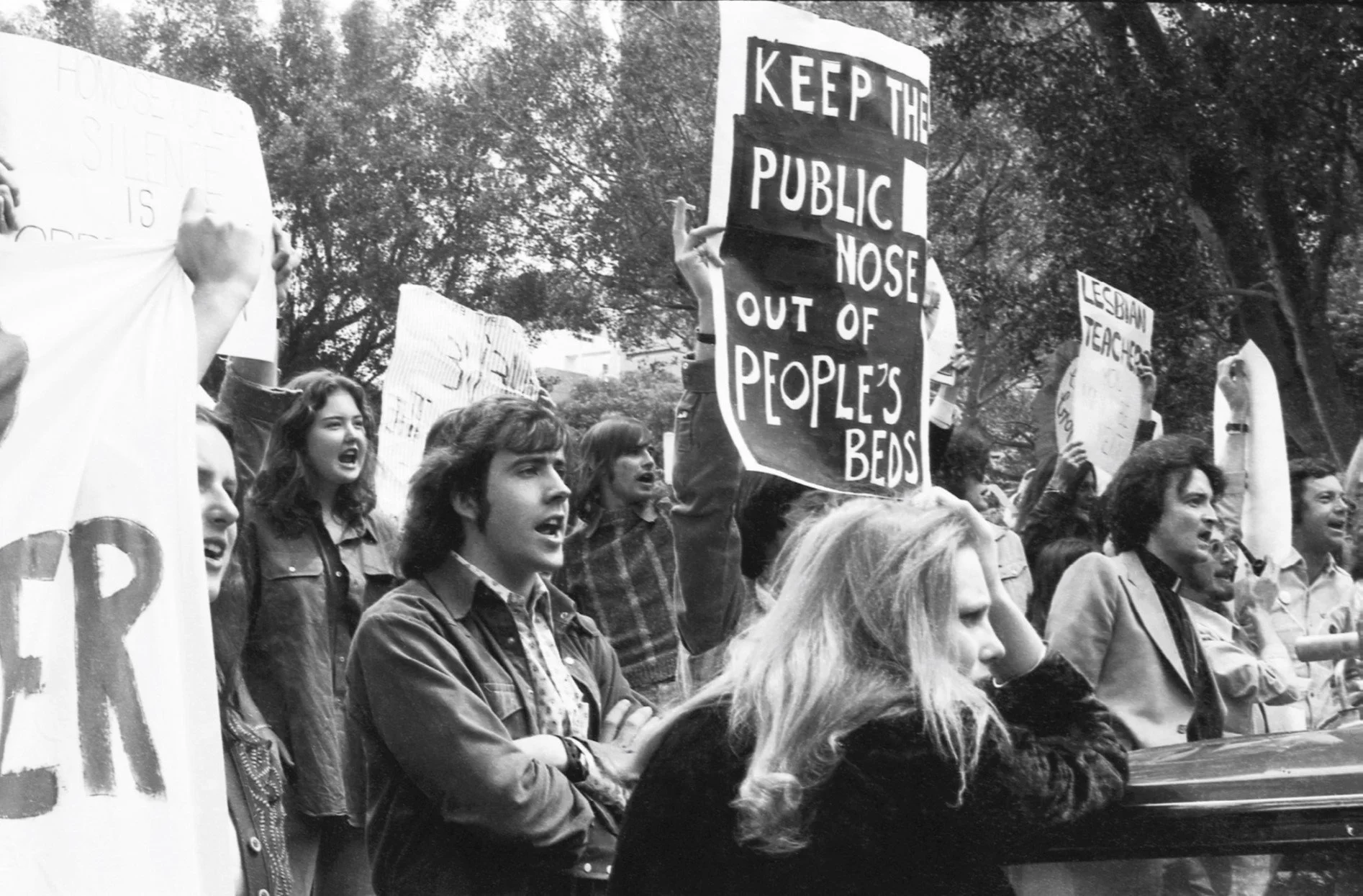
Demonstration against sacking of gay teacher Mike Clohesy, Hyde Park Sydney, 1975. In foreground L to R Mike Clohesy, Sue Gray. Photo credit: Kathie O'Rourke
The suspected police murder of law academic Dr George Duncan in Adelaide on 10 May 1972 was instrumental in South Australia becoming the first Australian state to decriminalise homosexual acts between men, in 1975. Gay and feminist activists opened the Doctor Duncan Revolution Bookshop in Adelaide as an organising centre in June 1974. The 1975 arrests at Black Rock beach in Melbourne proved a spur for law reform action in Victoria.
In 1975 the Australian Union of Students staged the First National Homosexual Conference in Melbourne drawing around 800 participants.
By 1978 lesbian and gay activism had become increasingly dispersed through multiple gay and lesbian groups as well as work within the trade union movement, the civil liberties lobby, the women’s movement, political parties and on university campuses.
A commercial bar scene had begun to appear in some cities, especially Sydney’s Oxford Street after 1976, emitting a siren call that attracted many. But with the violent Police attack of the first Mardi Gras Parade in 1978, united public activism was again sparked into action.
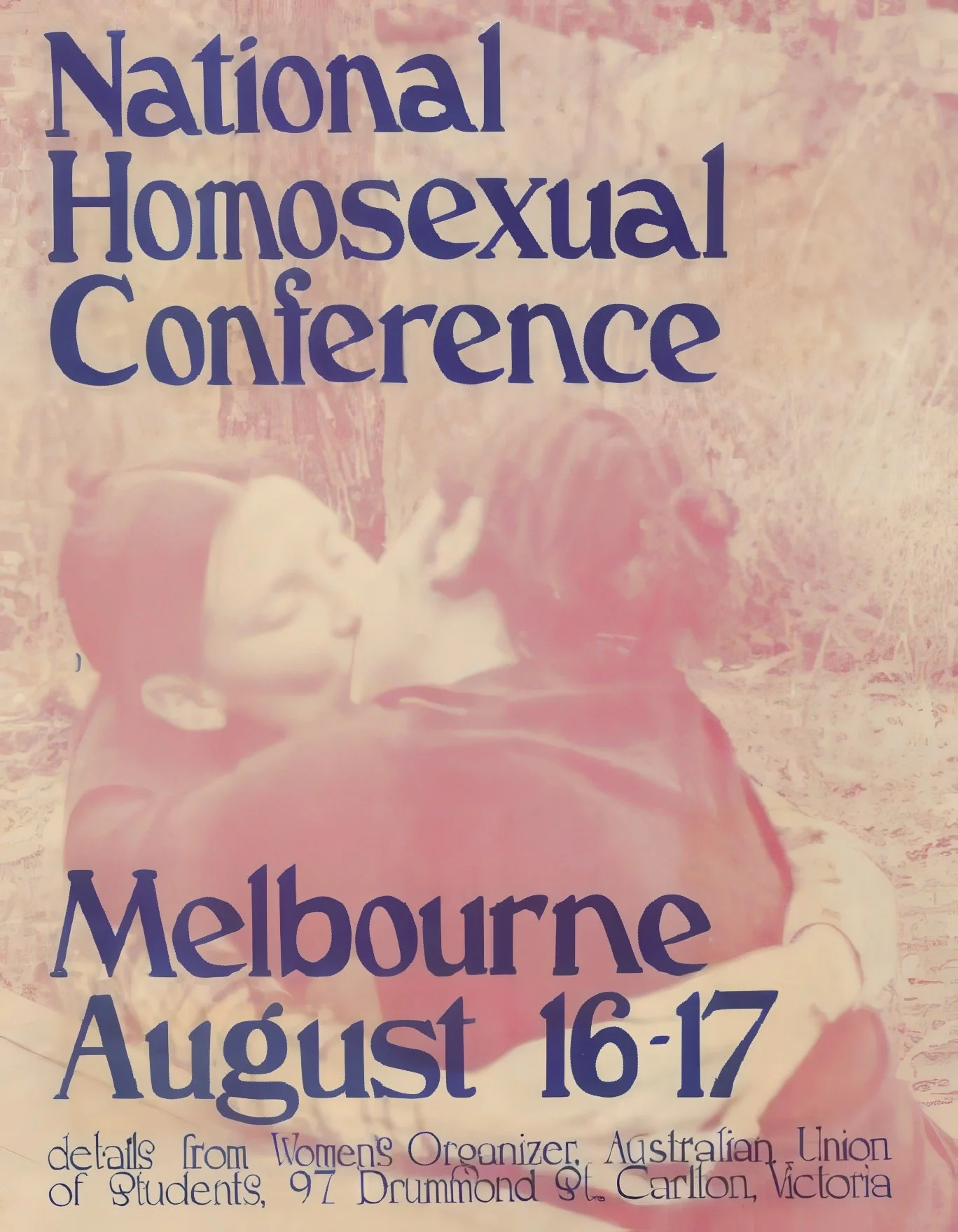
Photo Credit: Australian Queer Archives
Photos by John Englart from 1972, 1973, 1974, 1975 used on this website are copyright. They may be used for non-profit publication with an accompanying notice: Source: www.takver.com For further information, please contact John Englart www.takver.com