
Impact of Mardi Gras
Jump to: United action | Cultural Activism | Legal Reforms
United action
The shocking violence and arrests by police during the first Mardi Gras parade and the subsequent protests that took place from June to August 1978 constituted a significant turning point in lesbian and gay activism. Lesbian and gay individuals, organisations and supporters were united under common goals – an end to police harassment, repeal of oppressive legislation and an end to discrimination against homosexuals.
The right to peaceful assembly also became a flashpoint that united not just lesbian and gay activists but other social movements – civil libertarians, unions, students, the women’s movement, the Labor Party, political left and progressive churches. These social movements energised a massive campaign for lesbian and gay rights and a battle with the NSW government over Police control of public spaces.
The energising impact of resilient united action carried through over months and years resulting in most of the charges against 78ers being dropped in April 1979. In May 1979, the NSW Summary Offences Act was repealed.
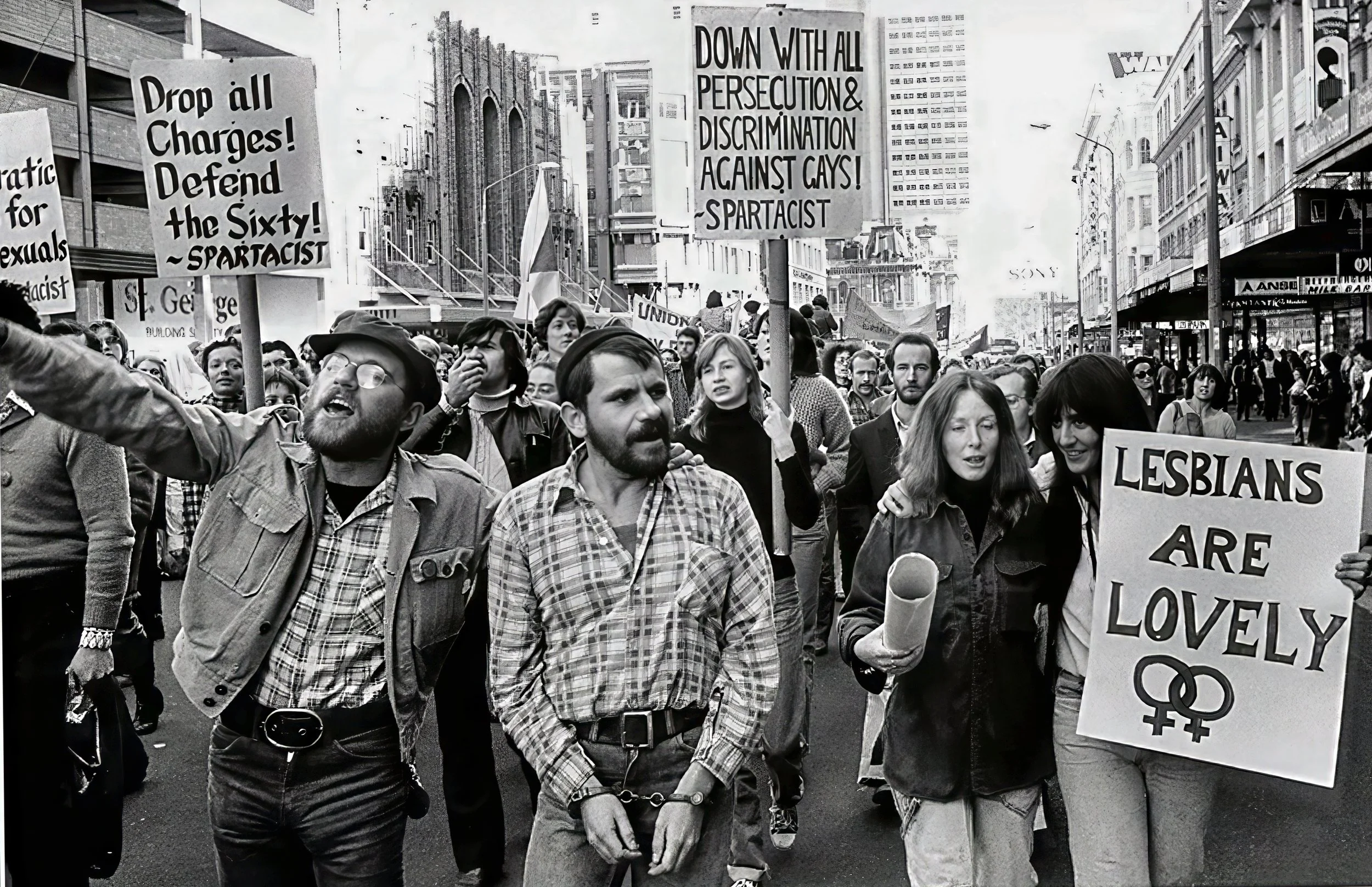
Marchers at the 15 July 1978 demonstration. Photo Credit: Geoff Friend
The Summary Offences Act was the legal framework that Police used to arrest 78ers. It was also used against Indigenous people, sex workers, demonstrations, displays of same sex affection and enabled entrapment in beats. After the repeal of the Act, NSW residents could just inform the Police they were having a demonstration, with no need to apply for a permit although the Police could lodge any reasonable objection within a short time frame.
Despite the opposition of many gay groups, gay businesses and gay media, a very enlarged, energised and defiant Gay Solidarity Group organised a second 3,000 strong night-time Mardi Gras parade on 30 June 1979. The parade was timed to coincide with the Stonewall anniversary International Gay and Lesbian Freedom Day events across the globe. The second parade had a dual focus – international solidarity and commemorating the anniversary of our own watershed moment. Because the parade was a peaceful success, a proud annual tradition was born.
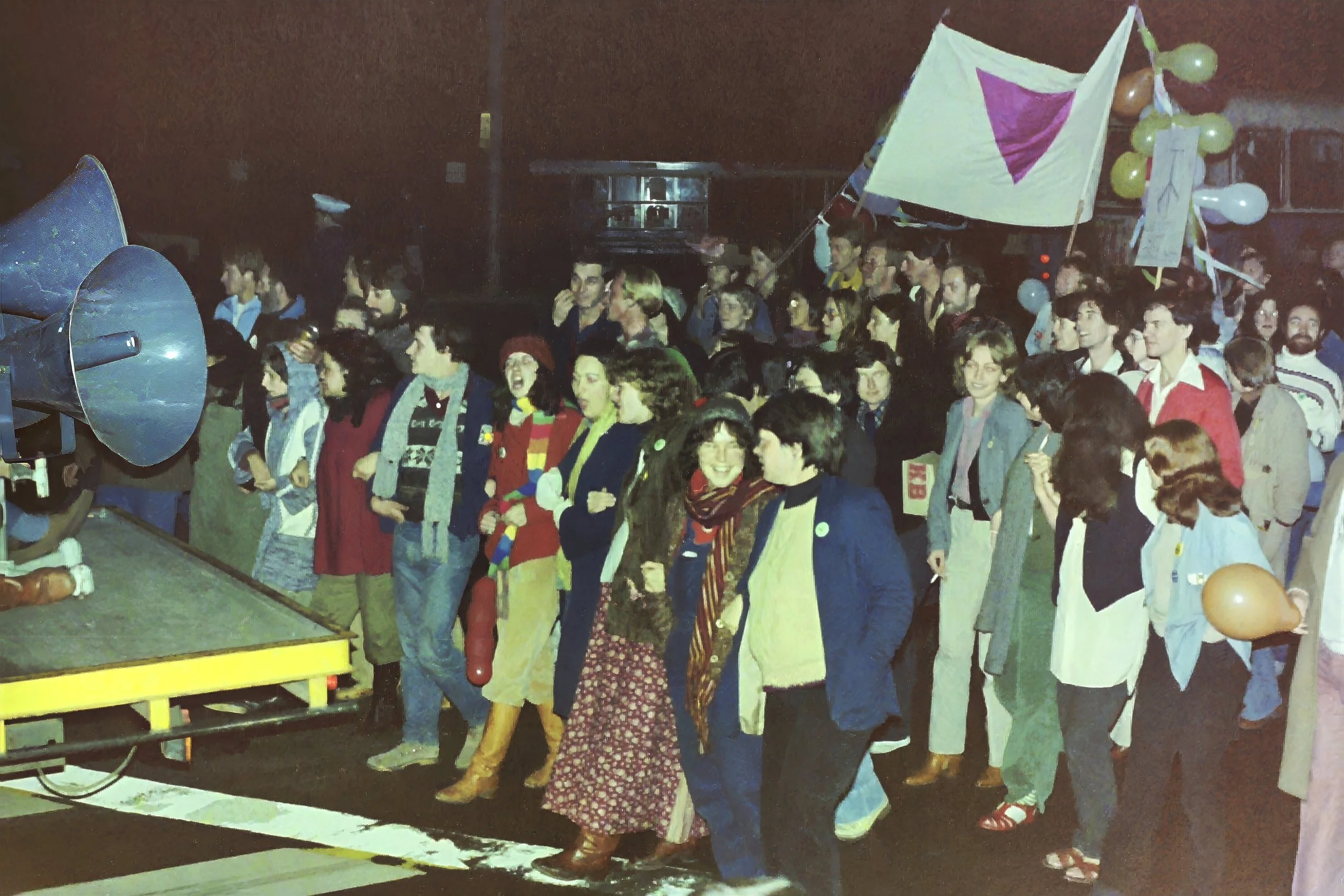
The second Mardi Gras 30 June 1979. Photo Credit: Robert French
Cultural Activism
The energy of the early Mardi Gras parades led to many years of creative confrontation with the Christian Right and gave some confidence to our communities in the darkest moments of the AIDS crisis from the early 1980s. Complementing the traditional demands of activists for sexual freedoms was what some describe as a new cultural activism, reflected in the more performance-based approaches of the Sisters of Perpetual Indulgence and the Gay Liberation Quire.
Many of The Quire’s members were active in the lesbian feminist and lesbian and gay rights movements in the 1970s and a third of them were 78ers. Many of the nuns were also 78ers. Sexologists Dr Mary Hartman and Dr Mary Hartman (also 78ers) entertained audiences with their five-finger-plan for getting a girl or boy.
Cultural activism involved new ways to attack anti-gay and anti-lesbian forces, while playing with identity, community, and movement norms.
Following the publication of Dennis Altman's Homosexual: Oppression and Liberation in 1972, Australia saw the rise of gay publications like the community-based CAMP Ink and commercial publications for both lesbians and gay men. Gay is Good, a 1976 publication from the University of Melbourne Gay Society, featured articles calling for understanding rather than tolerance.
The ongoing impact of Kerryn Higgs novel All That False Instruction, about a young woman's turbulent coming out, was still resonating with lesbians after its Australian debut in 1976. Lesbian bands started to emerge in Australia in the mid-70s, a development spurred by the feminist movement, often playing at gay and women’s dances including at Petersham Town Hall the night before the first Mardi Gras, where Sheila performed.
The Gaywaves Gay Radio Collective broadcasting on 2SER–FM from November 1979 played queer tracks, programs, news and even a long running soap opera, Gays of our Lives.
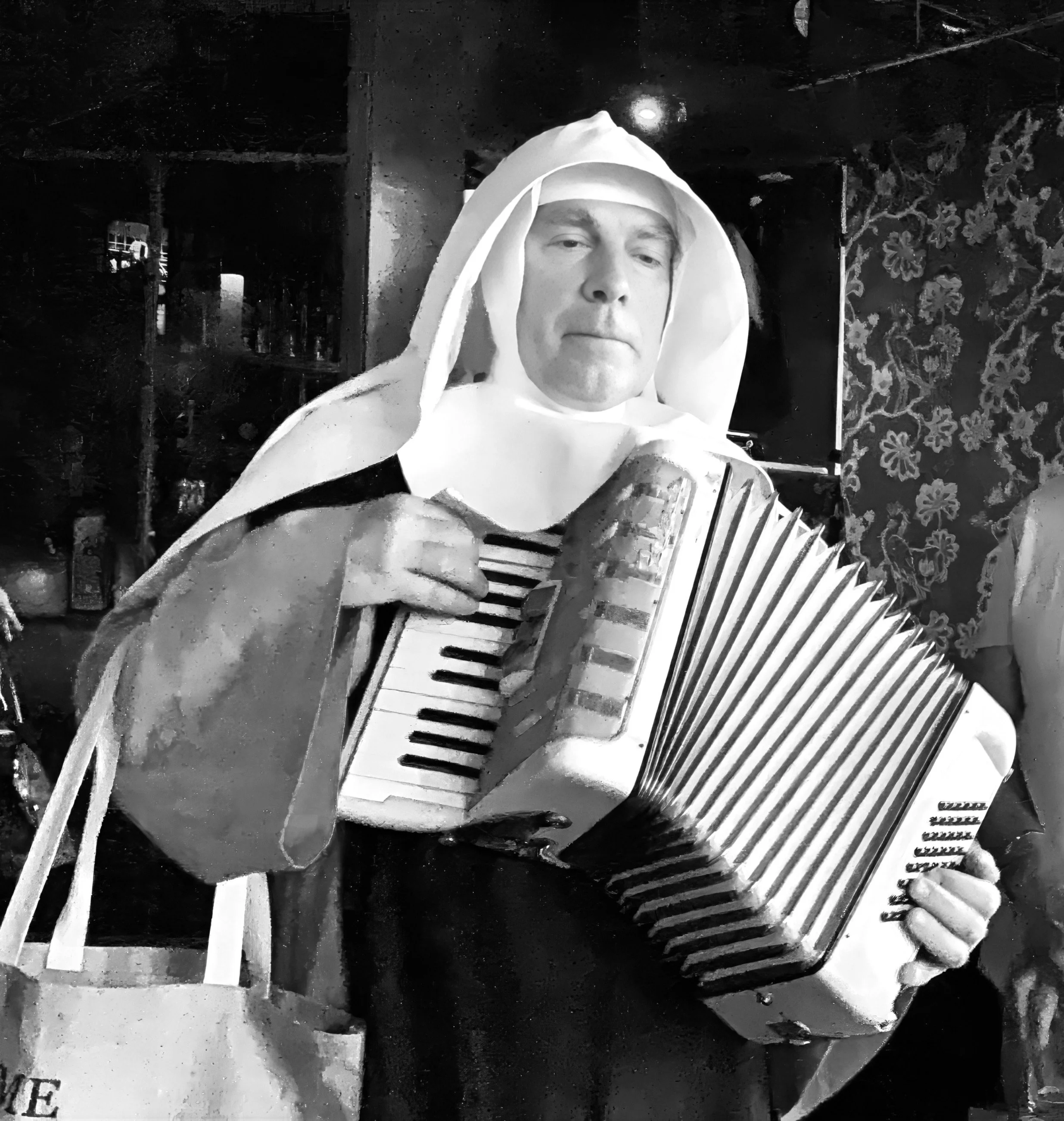
Fabian LoSchiavo, Mother Inferior of the Sisters of Perpetual Indulgence, 2022. Photo credit: William Brougham
Legal Reforms
In 1982, grass roots action, along with research and lobbying, led to an amendment to the NSW Anti-Discrimination Act, making it unlawful to discriminate against a person on the ground of their homosexuality in areas such as employment, education, provision of goods and services, accommodation and registered clubs. At the time, very few jurisdictions overseas had such laws.
In 1984, the Crimes Act in NSW was amended to decriminalise sexual acts between consenting adult males. But it wasn’t until 2003 that the age of consent for homosexual sexual acts was equalised with that for heterosexuals. NSW was the second last state in Australia to reform its unequal age of consent law.
The political impact of the Mardi Gras parades was also evident in the achievement in 1985 by the Gay and Lesbian Immigration Task Force of recognition of same sex “inter-dependent” relationships for Australian immigration, ahead of almost all other countries. Mardi Gras also gave impetus to broadening the diversity LGBTIQ interest groups and businesses, identity, and enterprise.
Now the parade represents a brilliant expression of creativity and community and a quirky, queer commentary on current events. It is a beacon for young people coming to terms with their sexuality, struggling with coming out in country towns, outer suburbs and in the bush. It remains a very public affirmation of the LGBTIQ community.
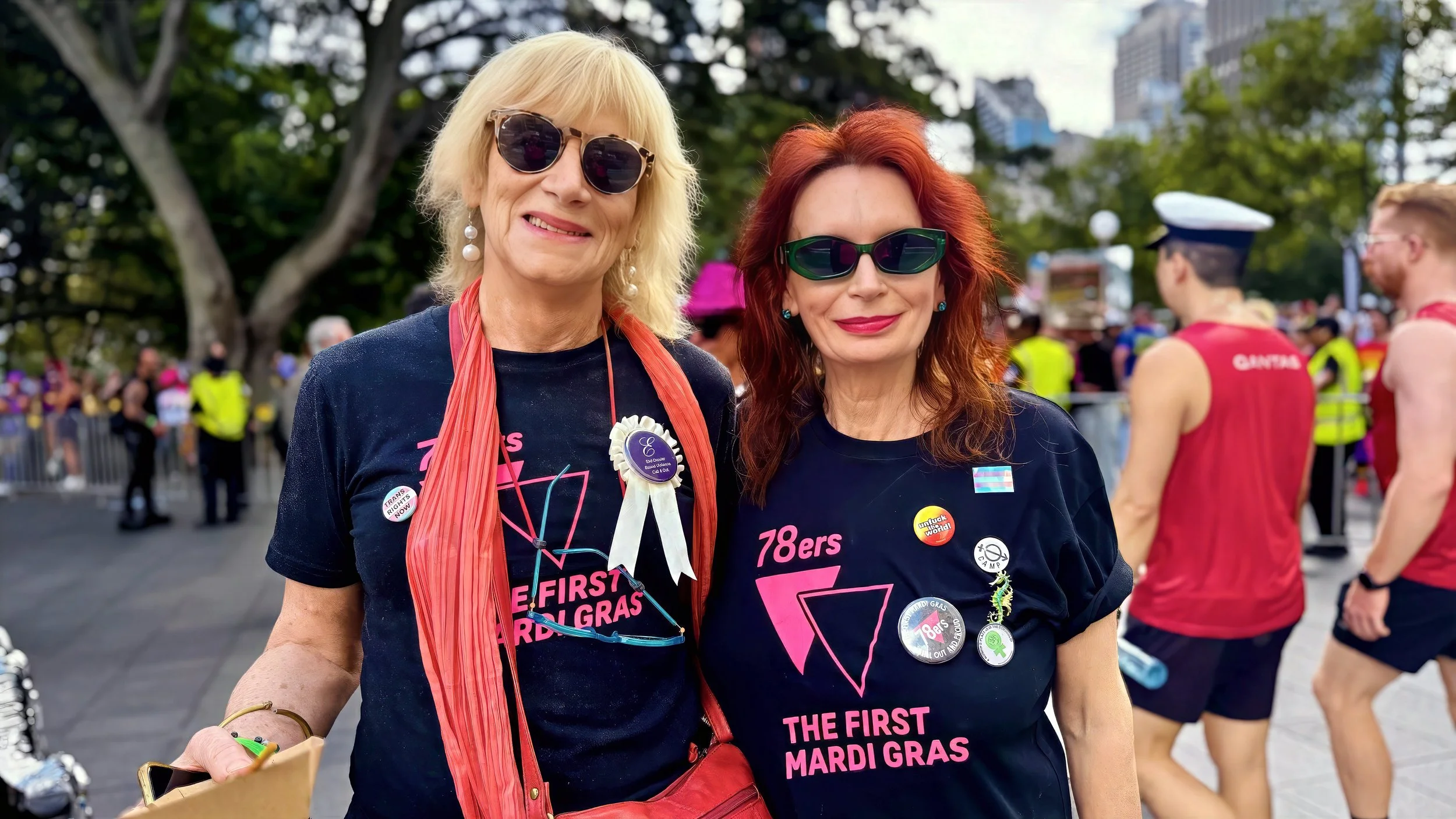
L to R: Jess Hooley, Deborah Macarthur-Newson, Mardi Gras Parade 28 February 2026. Photo Credit: Anne Morphett