
First Sydney Gay and Lesbian Mardi Gras
Origins
At the start of the 1970s, homosexuals were invisible in public life and homosexuality was deemed a sin, a crime and a sickness. The lesbian and gay rights movement began in Australia in 1969 with the formation of the Australasian Lesbian Movement (ALM) and the Homosexual Law Reform Society (HLRS) of the ACT. In 1970, CAMP (Campaign Against Moral Persecution) was formed in NSW, gaining national media coverage, and quickly spreading to all States.
Most of the lesbian and gay rights groups that formed during the 1970s had been influenced by the Stonewall Rebellion in New York in June 1969 - an angry response to a violent police raid on a lesbian and gay bar. Stonewall catalysed a new radical wave of gay and lesbian liberation that spread around the world. In 1973 Australia hosted its first national Gay Pride Week and saw the world's first union strike for gay and lesbian rights.
In 1976 in the USA calls for social and legal reforms came under attack from the Christian Right. Forming part of that backlash in 1978 was the Briggs initiative, a ballot proposition by a conservative California state legislator that would have removed any supporter of gay rights from any job in the public school system.
In early 1978 Anne Talve and Ken Davis, both based in Sydney, received a letter via lesbian activist Alison Britton in San Francisco. Campaigners were appealing for international solidarity in opposition to the Briggs Initiative. In San Francisco the Gay Freedom Day parade planned for the ninth anniversary of the Stonewall riots would be the focus of resistance.
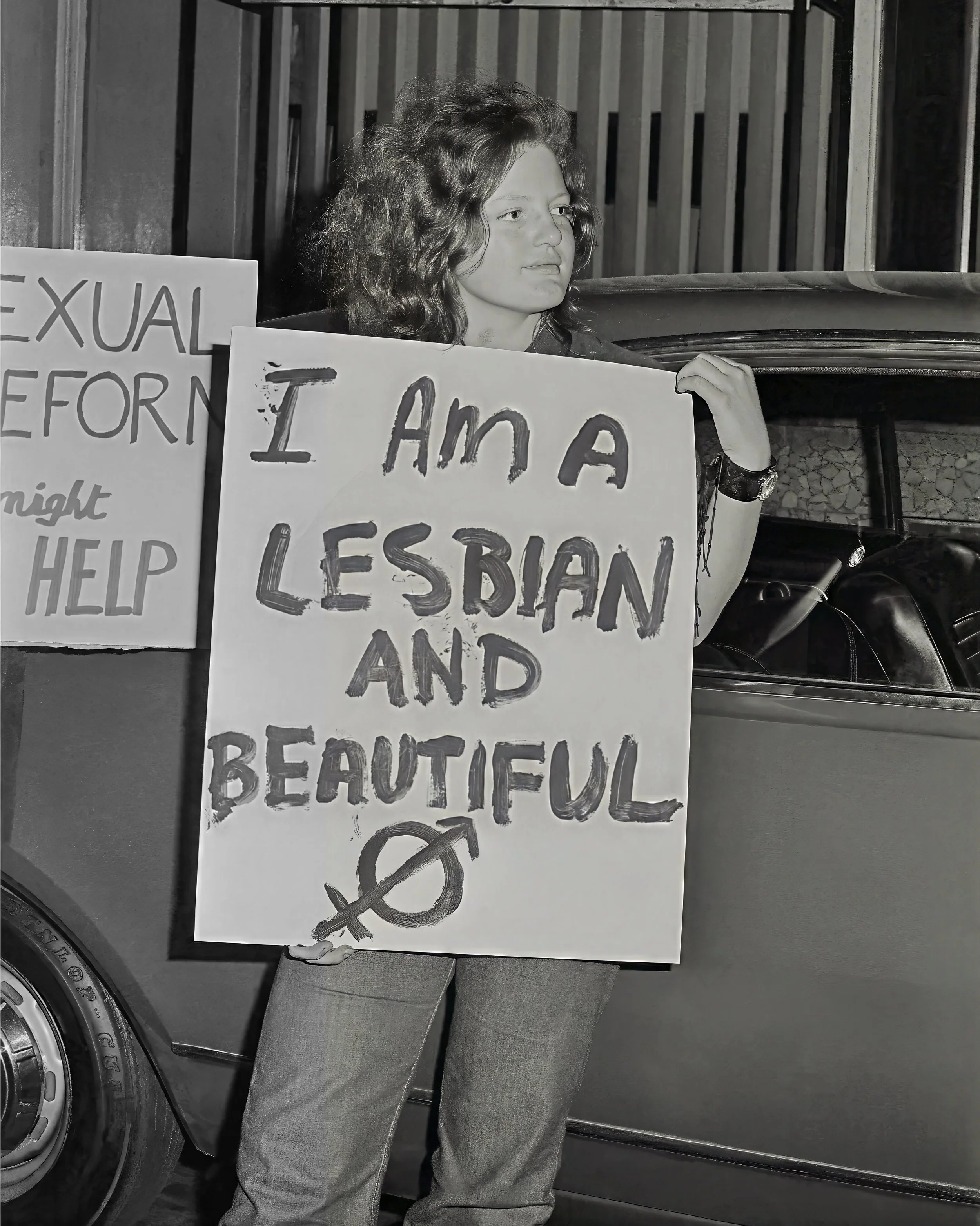
Mim Loftus, CAMP demonstration at Liberal Party headquarters Sydney, 6 October 1971. Photo credit: Philip Potter
In May 1978, Anne and Ken convened a meeting of individuals from gay, lesbian, university, socialist and religious groups at Sydney University Students Council to plan an International Day of Gay Solidarity on 24 June 1978. This coalition became the Gay Solidarity Group. The plan was to join lesbian and gay activities across the world on that day, and to respond to our own Christian Right backlash, led by the Festival of Light.
Initially, International Day of Gay Solidarity was to include a street march in the city on Saturday morning, a dance the night before at Petersham with women’s band, Sheila, and an afternoon forum at Paddington Town Hall on international struggles.
Inspired by seeing films of Gay Freedom parades in the Americas and Europe, a late-night celebratory street party was proposed by people from CAMP’s Political Action group, supported by Sydney university activists in the ADHOC group. The street party, to be held in Oxford Street, was intended to provide an opportunity to participate without the risk of being seen by family, school or work colleagues. In 1978, many lesbians and gay men could not take part in a public daytime demonstration – published photographs taken by news media could result in individuals losing their job or being rejected by their family.
The planned street party became known as Mardi Gras. It wasn’t only lesbians and gay men participating in the first Mardi Gras. Many others attended in support of our fight against oppression and discrimination.
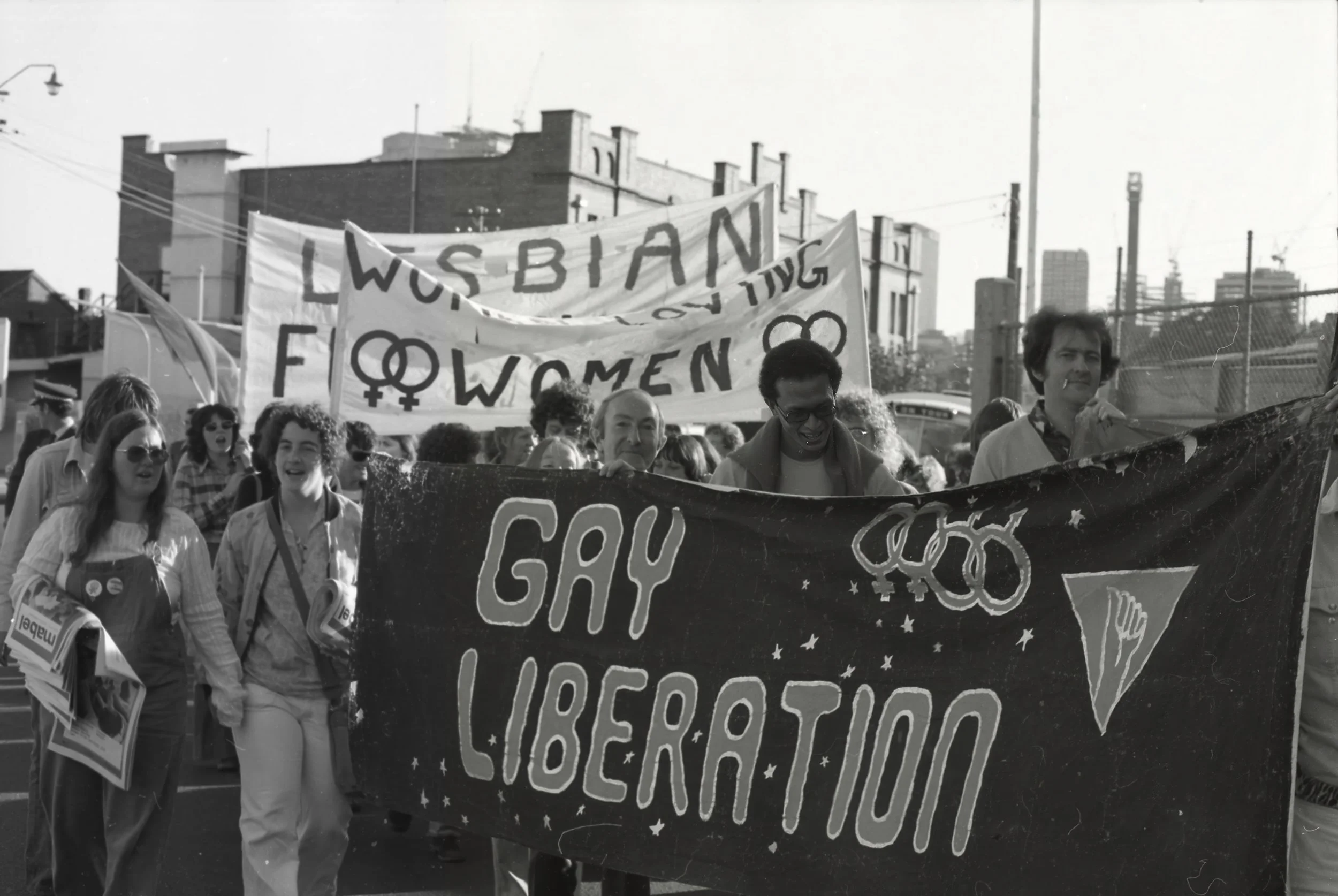
Front left: Diane Minnis, Kate Edwards, banner painted by Ken Davis, 1976. Photo credit: Kathie O'Rourke
Morning March
At 10am on Saturday 24 June 1978 over 500 people marched from Sydney Town Hall to Martin Place. Participants were very diverse, drawn from the multiple gay and lesbian groups that had formed during the 1970s as well as politically left groups. While there was some jostling from Police, there were no injuries or arrests.
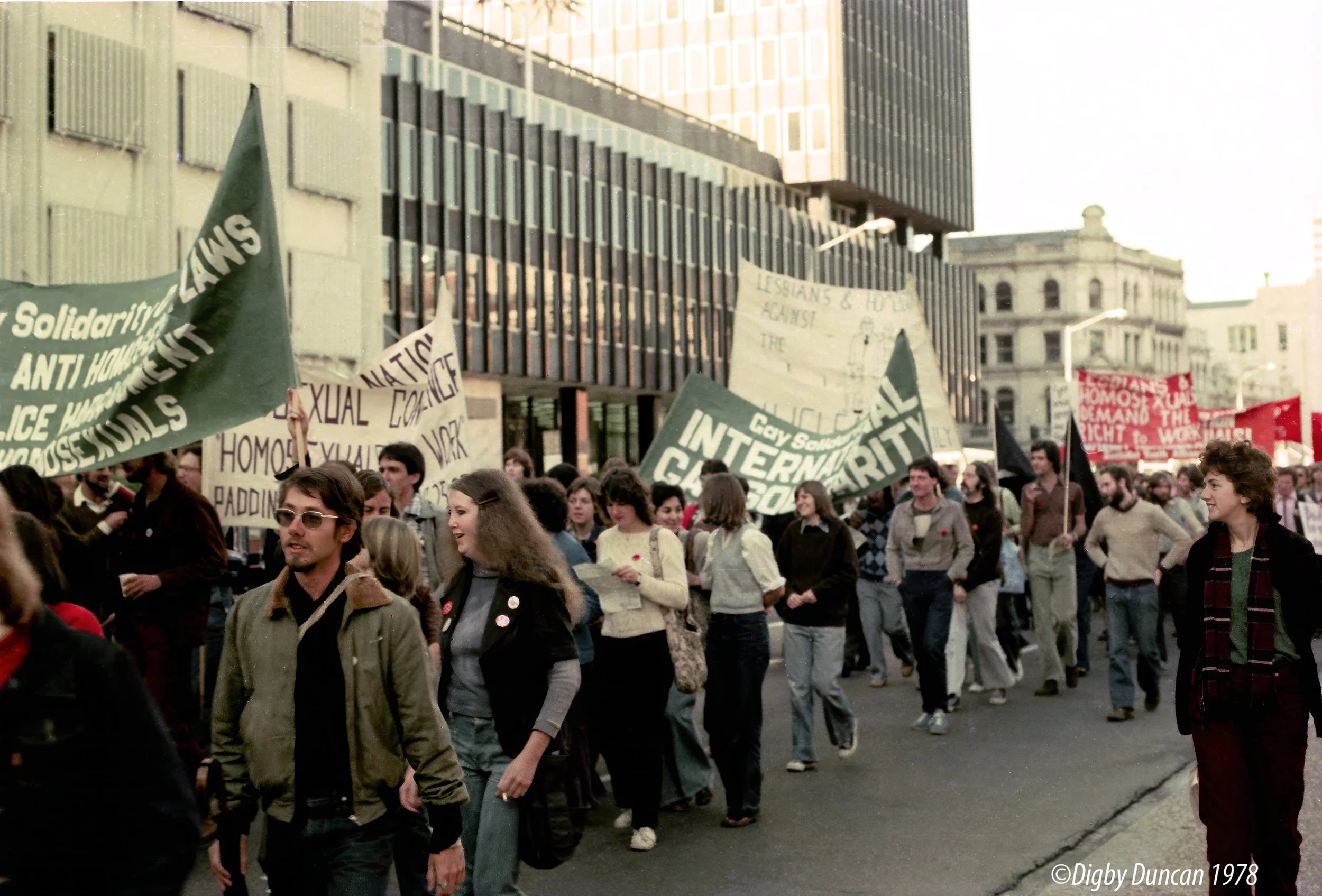
Morning March, 24 June 1978. Photo credit: Digby Duncan
The Mardi Gras Parade
At 10pm that night, people began to assemble at Taylor Square. We had a flat-bed truck with a sound system playing Meg Christian’s Ode to a Gym Teacher and Tom Robinson’s Glad to be Gay. Some people wore fun outfits – capes, floor length ruffled dresses, bizarre hats and lots of make-up. The Pope even made an appearance. Spirits were high.
Our intended route was to move down Oxford Street, stop for a while at Riley Street and then carry on to Hyde Park. We sauntered down Oxford Street behind the truck. It was a festive and light-hearted atmosphere. Lesbians and gay men came out of the bars to watch and a few even joined us – responding to our “Out of the bars and into the streets!” chant.
Even though we had a permit to ‘assemble and march’ the Police kept forcing the truck to speed up. It was clear that the Police were not going to let a street party happen.
By the time we got to Hyde Park, there were around 1,000 hyped-up people. But then the Police confiscated the truck. This was followed by shouts of To the Cross! The response from the crowd was electric – we charged over to William Street and up to Kings Cross. We were on the road, chanting and yelling. It was mass civil defiance, and it was exhilarating. Never had we collectively occupied space for a public celebration at night.
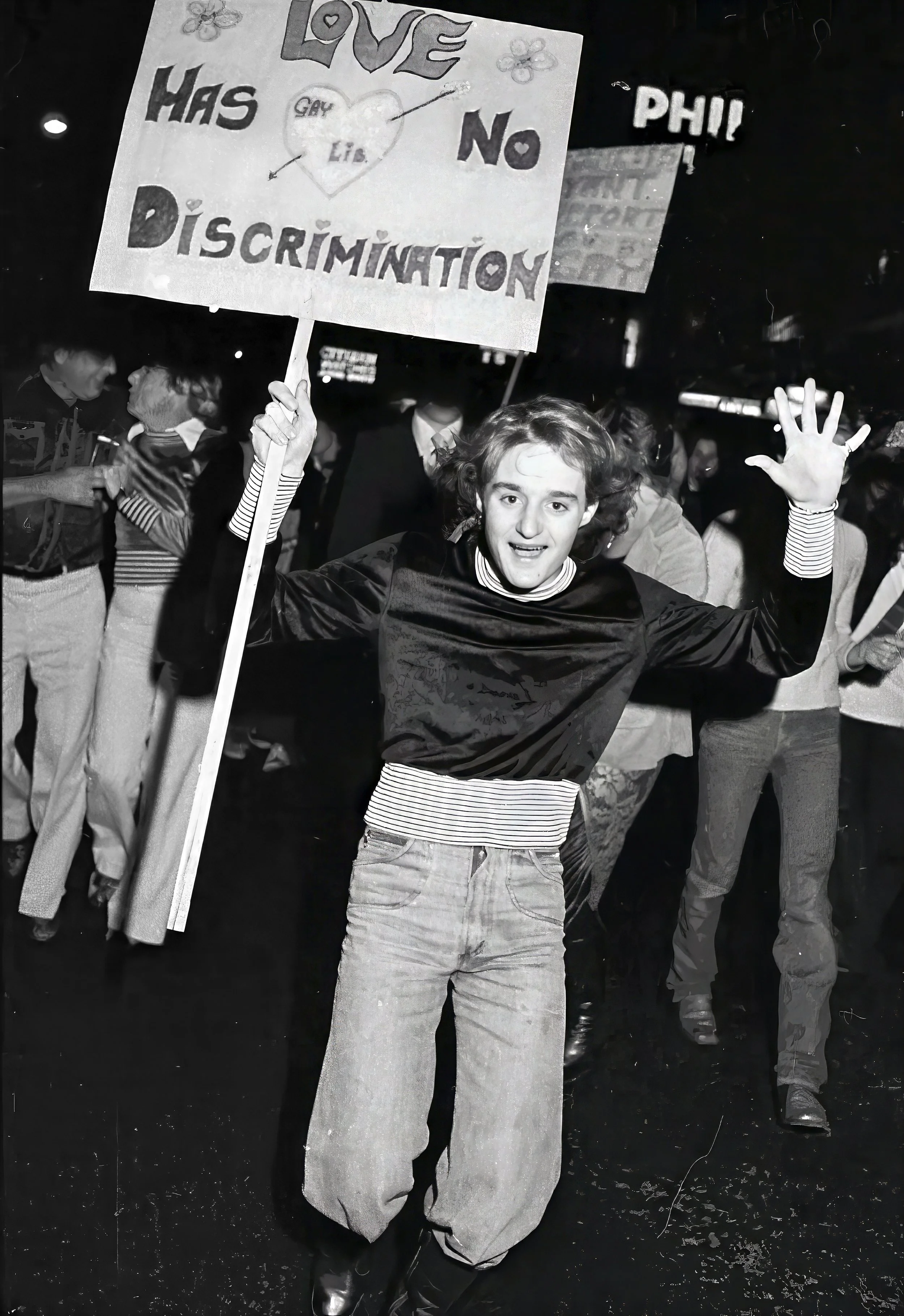
Johnny Whitehead, Mardi Gras Parade, 24 June 1978. Photo credit: John Sefton/NewsPix
Once we got to Kings Cross at around 11pm we started to disperse, but Police had blocked off both ends of Darlinghurst Road and started arresting people and throwing them violently into waiting police wagons. Participants were punched, pushed over, kicked, and dragged along the ground. The crowd fought back, fighting to release those arrested and pulling them out of the police wagons. Indigenous people and sex workers became involved in the fight. The bashing and arrests bound us all together.
The attack was not only unprovoked, it was also the most systematic police bashing and most arrests we had experienced. There was sudden urgency to our chants of “Stop police attacks on gays, women and blacks!”.
In all, there were 53 arrests and some brutal bashings, particularly in the cells at Darlinghurst Police Station. The remaining demonstrators gathered outside Darlinghurst Police Station and people went to find bail money and legal and medical assistance. But with no ATMs or mobile phones, this meant finding a public phone to call a landline and asking people to bring cash. We chanted and yelled out to those arrested inside - they later said they could hear us. We sang the gospel song associated with the US civil rights movement, We Shall Overcome…and overcome we largely did, eventually.
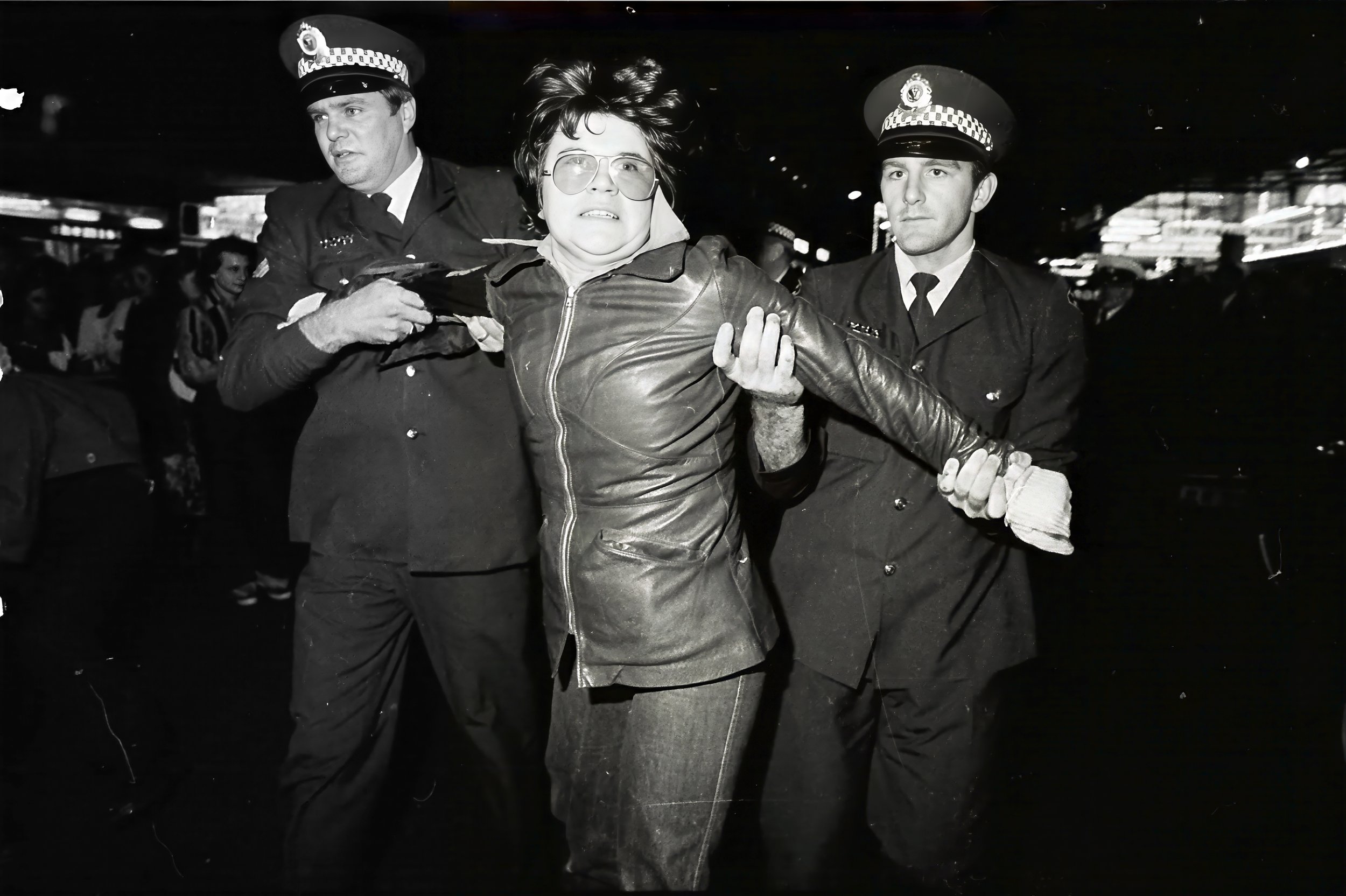
Sandi Banks, Mardi Gras Parade, 24 June 1978. Photo credit: John Sefton/NewsPix
On the following Monday 26 June, the Sydney Morning Herald published the names, addresses and occupations of those arrested. This was devastating for arrestees – with many losing their jobs, kicked out of home, being estranged from their families, or having their rental tenancy terminated.
But rather than shattering our spirits the violence and arrests galvanised community action – the Drop the Charges campaign sprang into action.
Mardi Gras formed part of global action against the Briggs Initiative, underlining that international solidarity was central to the development of our movement in Australia. On 24 June 1978, 300,000 people marched in San Francisco’s Gay Freedom Day, and 85,000 in New York. Tens of thousands marched across other North American cities and in Europe. In November 1978 the Briggs Initiative was defeated largely due to the efforts of a strong coalition of lesbian and gay, African American, women’s and labour movements. This was a globally significant victory.
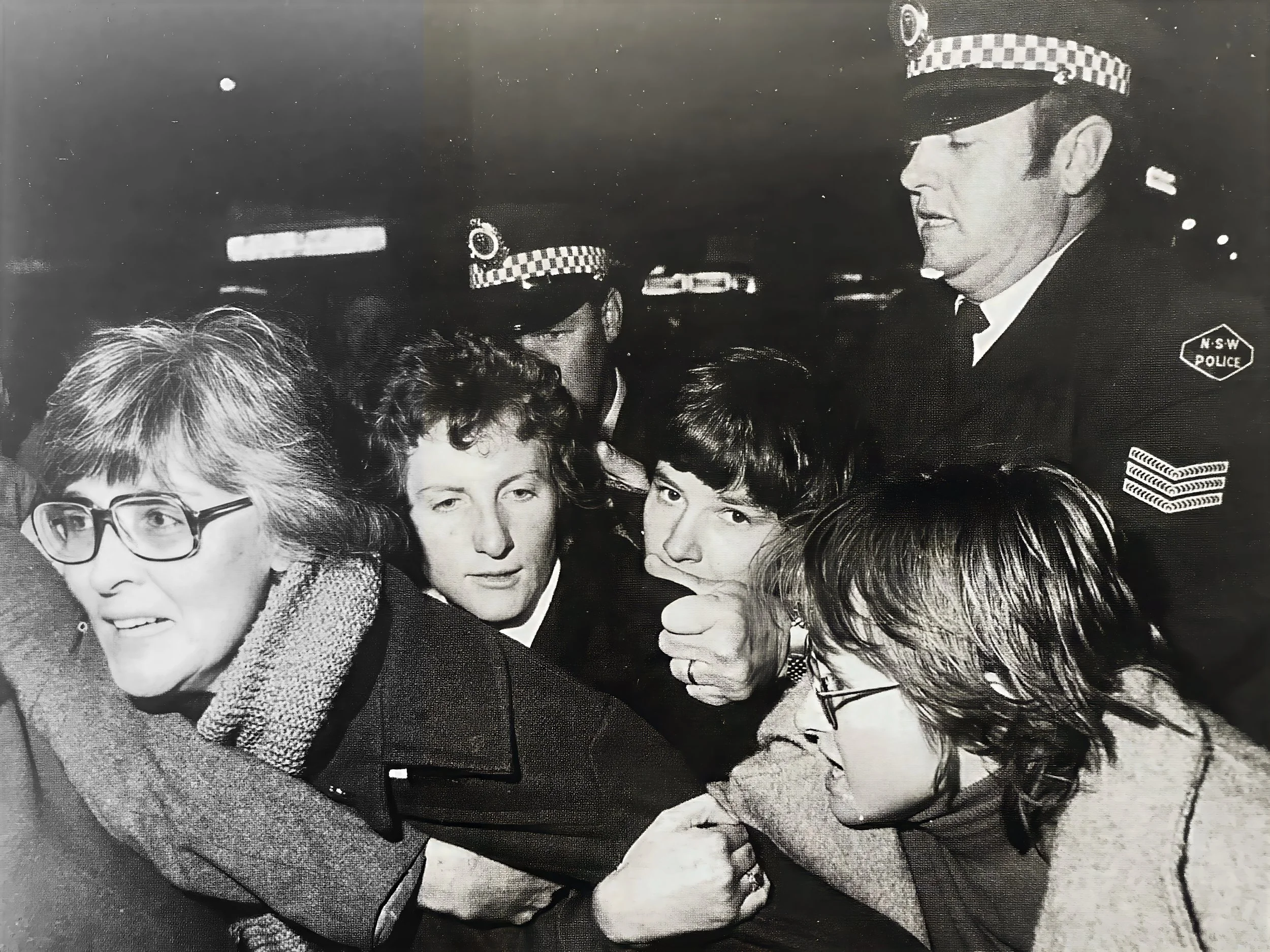
L to R: Gail Hewison, Robyn Grace, Marg Lyons, Penny Gulliver, Mardi Gras Parade, 24 June 1978. Photo credit: John Sefton/NewsPix